
A lot of MEPCO consumers install solar panels expecting one simple result: export extra electricity during the day, and the monthly bill should disappear.
Then the first bill arrives.
There are still units printed on it. There may still be taxes and fixed charges. Sometimes the exported units seem much lower than expected. And in some cases, a consumer who thought they had produced plenty of solar electricity still has an amount payable.
That confusion usually starts with one misunderstanding. Solar generation and solar export are not the same thing, and neither automatically means that every part of your MEPCO bill becomes zero.
I have seen this question come up repeatedly while reviewing information about MEPCO billing and net-metering systems for consumers. The meter records electricity moving in more than one direction, while the bill has to account for the applicable billing rules, charges, and the relationship between imported and exported electricity.
So let’s look at what actually happens after your solar system starts exporting power.
1. Your Solar Panels First Reduce Your Own Electricity Use
Before thinking about exported units, it helps to understand what happens inside the house.
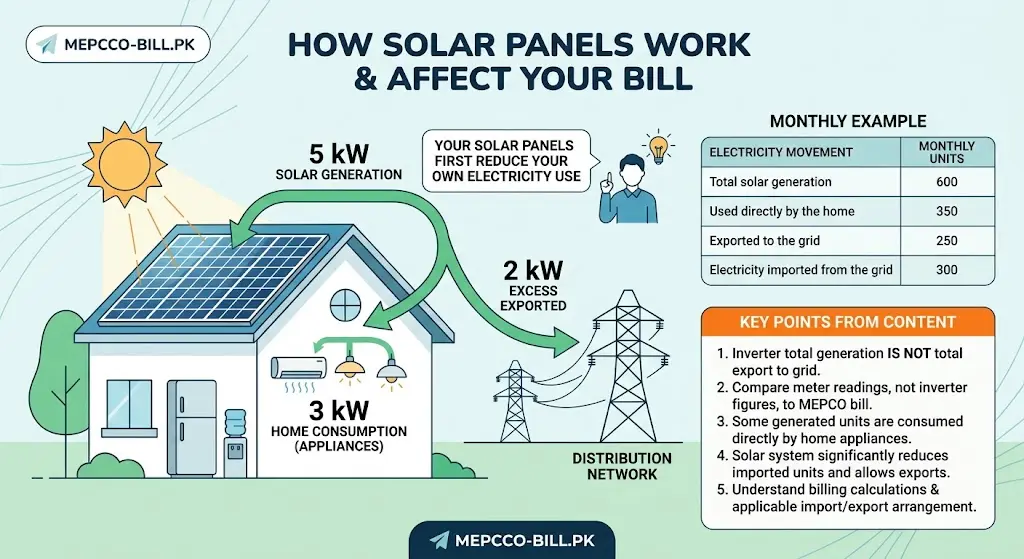
Suppose your solar system is producing 5 kilowatts of electricity at noon, while your home is using 3 kilowatts. The first 3 kilowatts are generally being used by your appliances at that time. Only the remaining electricity is available to flow back toward the distribution network through the approved metering arrangement.
This distinction matters because your solar inverter may show that it generated 600 units during the month, but that does not mean all 600 units were exported to MEPCO.
Some of those units were consumed immediately inside your home.
A simple example looks like this:
| Electricity movement | Monthly units |
|---|---|
| Total solar generation | 600 |
| Used directly by the home | 350 |
| Exported to the grid | 250 |
| Electricity imported from the grid | 300 |
The solar system has still helped significantly. You used 350 units without needing to import them from the grid, and you also exported 250 units. But the billing calculation depends on the actual meter readings and the applicable arrangement for imports and exports.
This is where people usually go wrong. They compare their inverter’s total generation figure directly with their MEPCO bill. Those are two different measurements.
If you are still getting familiar with your electricity bill itself, it also helps to understand how the latest bill layout presents meter readings and charges. Our guide to the new MEPCO bill format explains why different figures appear in separate parts of the bill.
2. Exported Electricity and Imported Electricity Are Recorded Separately
A properly configured net-metering setup uses metering equipment capable of recording electricity moving in both directions.
One reading represents electricity imported from the MEPCO distribution system. Another represents electricity exported from your solar installation.
The basic idea is straightforward:
Import: Electricity taken from the MEPCO grid.
Export: Surplus electricity sent from your solar system to the grid.
But the monthly bill is not always as simple as subtracting one number from the other and declaring the difference your final bill.
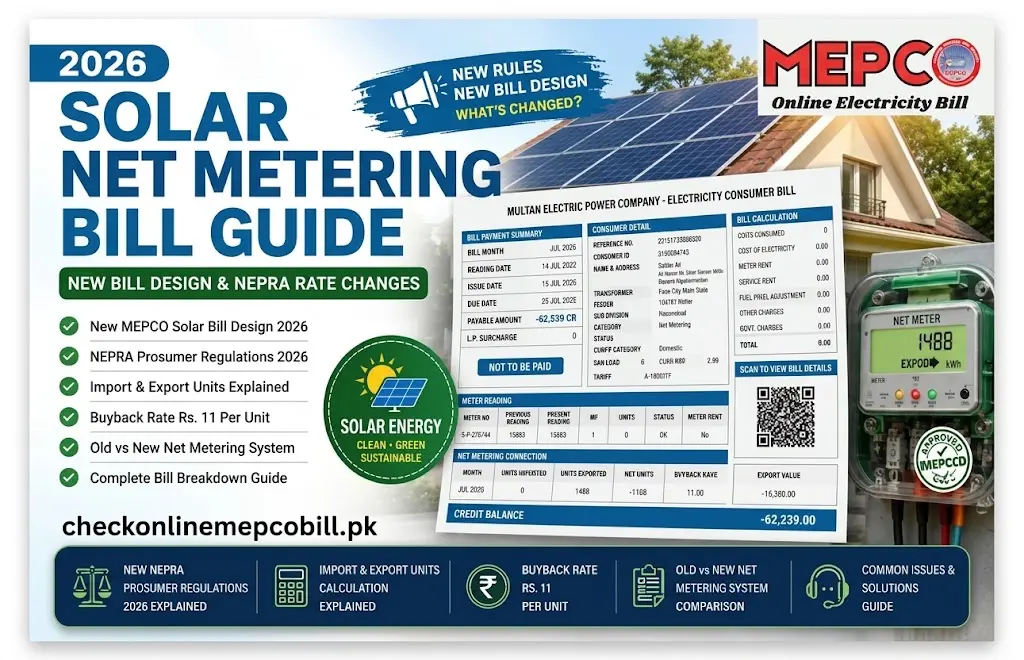
Billing depends on the regulations, tariff structure, meter readings, and the rules applicable to your particular net-metering arrangement. Pakistan’s electricity regulations have also changed over time, so consumers should be careful about relying on an old YouTube video or a neighbour’s bill from several years ago.
That point deserves more attention than it usually gets.
The rules that applied when one consumer received approval may not be identical to the rules being discussed for newer applications or future arrangements. MEPCO consumers considering solar should therefore review the latest information rather than assuming that every exported unit will always have the same financial effect.
Our coverage of MEPCO net-metering rules and recent updates is useful for consumers who want to understand the broader regulatory side before making assumptions based only on their monthly bill.
3. Why Your MEPCO Bill May Not Become Zero
This is probably the biggest surprise for new solar users.
You export electricity. Your home generates plenty of solar power. Yet an amount still appears on the bill.
Why?
Because an electricity bill contains more than the cost associated with the units you consumed from the grid. Depending on the applicable tariff and billing rules, other components may still appear. These can include fixed charges, taxes, duties, and other applicable adjustments.
The exact entries on a bill should always be read individually.
For example, a household may import relatively little electricity during a billing cycle but still see charges that are not eliminated simply because solar panels were producing power during the day.
Think of it this way:
- Solar reduces the amount of electricity you need to buy from the grid during daylight hours.
- Surplus generation may be exported under the approved arrangement.
- The meter records the relevant import and export figures.
- MEPCO prepares the bill according to the applicable billing rules.
- Other bill components may still remain.
And there is another practical issue. Solar production happens mostly during daylight. Your home may consume substantial electricity after sunset, particularly if air conditioners, water pumps, heaters, or other heavy appliances are running.
A consumer can therefore have an excellent solar production graph and still import a meaningful amount of electricity at night.
That’s why I usually suggest looking at the complete pattern of electricity use instead of checking only one number on the inverter screen.
4. A Credit for Export Is Not the Same as Cash in Your Hand
Another misconception is that exporting electricity means MEPCO will simply send you money every month.
The treatment of exported electricity depends on the applicable regulatory and contractual framework. A credit or adjustment on an electricity account should not automatically be interpreted as a direct monthly cash payment.
This is especially important because people use the phrase “selling electricity to MEPCO” very casually. It sounds simple, but the billing treatment behind that phrase can involve specific rules.
Here is a quick reference chart:
| What the consumer sees | What it actually means |
|---|---|
| Solar inverter generation | Total electricity produced by the solar system |
| Direct solar consumption | Electricity used immediately in the property |
| Export reading | Surplus electricity recorded as flowing to the grid |
| Import reading | Electricity taken from the grid |
| Monthly bill | The final billing calculation under the applicable rules |
The most useful habit is to keep your monthly bills and compare them over several billing cycles.
Don’t judge your entire solar system based on the first bill.
Weather changes. Seasonal appliance use changes. Daytime consumption changes too. A household using air conditioners heavily during sunny hours will have a very different import and export pattern from a house that remains mostly empty during the day.
5. The Billing Month Can Create Some Confusing Results
Meter readings are taken for a defined billing period, while your solar production changes every day.
A few cloudy weeks can reduce generation. Dust on panels can affect output. A household may also suddenly consume more electricity because of guests, extreme weather, or new appliances.
Then there is the reading date.
Suppose your MEPCO billing period runs from one specific date to another. The solar generation figures you are looking at in your mobile application may be based on calendar months instead. Comparing August’s complete inverter generation with a bill covering part of July and part of August will naturally produce confusing numbers.
This sounds obvious once you notice it, but people miss it all the time.
I would compare the following information for the same billing period:
- Import units shown on the electricity bill.
- Export units shown on the relevant meter records.
- Solar generation from the inverter application.
- Your major appliance usage during that period.
That comparison gives you a much clearer picture of where the electricity went.
For consumers checking their billing information regularly, mepcco-bill.pk can also be used as a convenient reference point for understanding MEPCO bill details and related consumer information. The important part is to keep the official bill as your primary record when checking charges.
6. A Wrong or Estimated Reading Can Make Solar Billing Look Strange
Not every unusual solar bill is actually caused by solar export.
Sometimes the problem is the meter reading itself.
If a reading is estimated or incorrectly recorded, the resulting bill may not accurately reflect the electricity movement you expected for that billing cycle. This can be particularly frustrating for a solar consumer because there are already multiple numbers to compare.
A sudden result that makes no sense should be investigated instead of ignored.
For example, if your solar production remained stable, your household’s usage did not change much, and the bill suddenly shows an unusual jump in imported units, check the meter readings and billing details first. Our guide on wrong MEPCO meter readings and how to address them may help you understand what to review before contacting the relevant office.
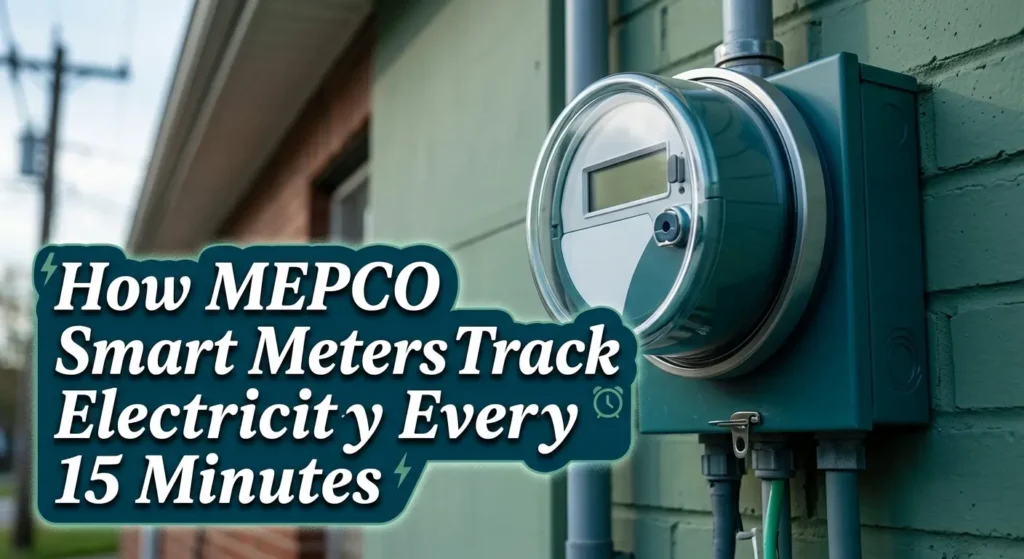
And one small side thought here: smart metering could make this process easier for consumers over time because automated readings reduce dependence on traditional manual collection. MEPCO’s rollout of smart AMI meters in selected areas is therefore worth watching, especially for people interested in more detailed electricity usage information.
But back to the bill itself.
Before assuming your solar panels have stopped working or your exported units have disappeared, verify the readings, dates, and billing period.
7. How to Check Whether Your Solar Export Is Helping
You do not need complicated calculations every month.
Start with a few practical checks.
Check your imported units
Compare the current billing period with similar months from before your solar installation. Seasonal differences matter, so comparing May with May is usually more useful than comparing May with December.
Check your exported units
Look at the readings associated with electricity exported to the grid under your approved metering arrangement.
Check daytime electricity habits
A solar system provides the greatest direct benefit when household consumption occurs while the panels are generating electricity. Running certain appliances during daylight can change how much electricity you need to import later.
Review every line on the bill
Don’t focus only on the total payable amount. Look at units, meter readings, billing dates, taxes, duties, and other charges.
Keep several months of records
One bill tells a story. Six bills tell a much better story.
You can also keep a simple spreadsheet with monthly solar generation, imported units, exported units, and total bill amounts. It takes a few minutes, and after several months you begin to see patterns that are impossible to notice from a single bill.
That practical record is often more useful than relying on memory, because nobody accurately remembers every month’s electricity use.
8. The Biggest Mistake Is Expecting Solar to Solve Every Billing Issue
Solar can significantly reduce your dependence on grid electricity. It does not automatically remove every charge from every MEPCO bill.
That expectation creates unnecessary disappointment.
The real value of a solar installation depends on several things working together: the size of the system, actual household consumption, daytime usage patterns, system performance, approved export arrangements, and the applicable billing rules.
A 10-kilowatt solar system is not automatically a better financial fit than a smaller system if the household’s actual consumption pattern doesn’t justify it. More generation does not always mean more immediate savings in the way consumers imagine.
And then there’s maintenance. Panels that are heavily covered in dust or operating with an inverter issue may not produce what the installation originally promised. Again, the inverter’s daily or monthly production data should be reviewed alongside the electricity bill, not instead of it.
For general MEPCO billing guidance, mepcco-bill.pk continues to cover the issues consumers regularly face, from unusual charges to reading problems and payment questions.
The best approach is simple, even if the bill isn’t always simple. Know how much electricity you generate, know how much you use, and check what your meter and monthly bill are actually recording.
FAQs
Will my MEPCO bill become zero after installing solar panels?
Not necessarily. Solar panels can reduce the electricity you import from the grid, and surplus electricity may be exported under the applicable arrangement. However, other applicable charges and billing components can still appear on your monthly bill.
Why does my inverter show more units than my MEPCO export reading?
Your inverter shows total solar generation. A significant portion of that electricity may have been consumed directly by appliances in your home before any surplus was exported to the grid.
Can I receive money for every unit of electricity exported to MEPCO?
The treatment of exported electricity depends on the applicable net-metering regulations and the terms of the approved arrangement. Consumers should review the current rules rather than assuming every exported unit results in a direct cash payment.
What should I do if my MEPCO solar bill looks incorrect?
First, check the billing period, meter readings, import and export figures, and your recent solar generation data. If the figures still appear incorrect, contact MEPCO through the appropriate complaint or customer service channel and keep copies of your bills and relevant records.
Does using more electricity during the day help a solar consumer?
It can improve the direct use of electricity generated by your solar system because appliances operating during daylight may use solar power immediately. The overall financial effect still depends on your system, usage pattern, and the applicable billing rules.
Solar export changes the way you should read your electricity bill. The number at the bottom still matters, of course, but the real picture sits behind it in the import readings, export readings, household usage, and solar production data.
If something on your bill doesn’t make sense, start with the readings. They usually tell you more than the total amount ever will.
For more help with checking and understanding your electricity billing information, visit mepcco-bill.pk.

Pingback: MEPCO Net Metering NOC Delayed? Here Is Why – MEPCO Bill Check 2026