The first time a smart meter reading looks completely different from what you expected, the natural reaction is to assume the meter is faulty.
I’ve seen this confusion come up repeatedly around MEPCO billing. A consumer checks the display, compares it with the number printed on the bill, and concludes that one of the two must be wrong. Sometimes that conclusion is correct. Quite a few times, though, the problem is simply that the two numbers are being compared incorrectly.
Smart meters add more information to the equation, not less.
MEPCO has been using advanced metering technology as part of its effort to improve billing accuracy, and its own customer-service material describes AMR and smart meters as tools for more accurate meter reading. NEPRA’s Consumer Service Manual also specifically addresses metering accuracy, defective meters, and meter replacement.
So if your MEPCO smart meter reading looks wrong, don’t start by assuming the meter is broken. Start by checking what the meter is actually showing, what reading MEPCO used, and whether the billing period matches the dates you’re comparing.
1. The Number on the Meter and the Number on Your Bill Are Not Always the Same
This is where many consumers go wrong.
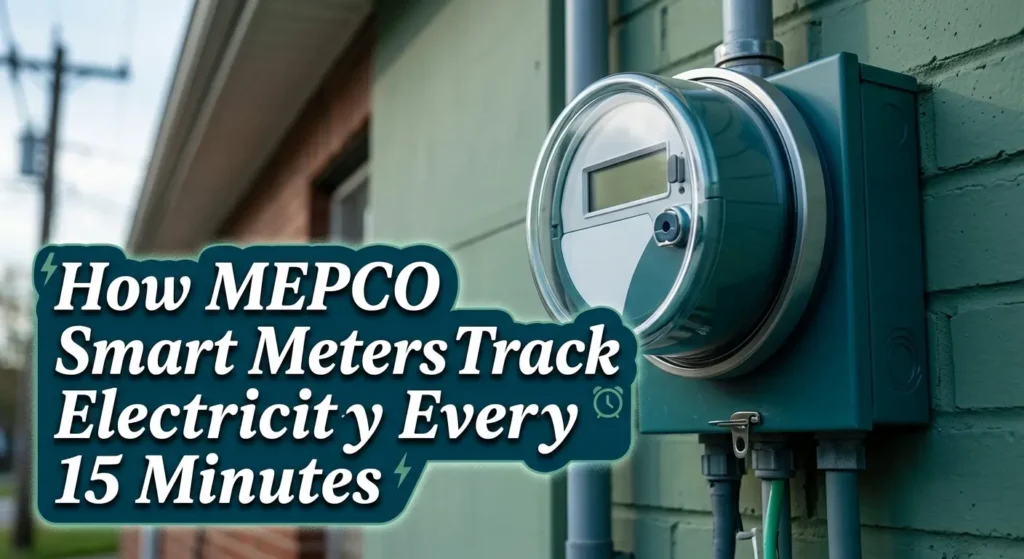
A smart meter has a digital display and can show several different values or indicators. The figure you see at one moment isn’t necessarily the exact figure that was captured for the bill you’re holding.
Your bill is based on a billing reading associated with a particular reading date. The meter, meanwhile, continues recording consumption after that reading has been taken.
That means a simple comparison like this:
Meter today: 1,842 units
Bill reading: 1,790 units
doesn’t automatically mean MEPCO made a mistake.
If the meter was read at 1,790 and your household subsequently consumed another 52 units, a later reading of 1,842 is perfectly normal.
This distinction becomes especially useful with smart or AMI meters because the technology is designed to provide consumption information electronically rather than relying solely on a person physically looking at the meter.
MEPCO’s published customer-service information says advanced meter-reading technology, including AMR and smart meters, is being used to support accurate billing.
There is another small detail people overlook: the reading date.
Before deciding that your bill is wrong, compare these three things:
| What to check | What you are looking for |
|---|---|
| Previous bill reading | The reading used for the previous billing cycle |
| Current bill reading | The reading used to calculate the current bill |
| Smart meter display | The meter’s current accumulated reading |
| Reading dates | Whether the dates actually match |
| Units billed | Difference between the applicable readings |
The basic calculation is straightforward:
Current billing reading − Previous billing reading = Units consumed
But don’t substitute today’s display reading for the historical billing reading unless the dates match.
That’s a surprisingly common mistake.
2. A Smart Meter Can Show More Than One Useful Reading
Digital meters are not always as self-explanatory as they look.
Depending on the meter and installation, the display can cycle through different information. A consumer might see a cumulative energy reading, another electrical parameter, a meter identifier, or other operational information.
The important number for ordinary household billing is the accumulated energy consumption, generally expressed in kWh, which people commonly call units.
So if your meter screen is showing something that looks strange, first establish what that screen represents.
Don’t compare a voltage, current, instantaneous demand, or another displayed value with the units printed on your electricity bill. They are different measurements.
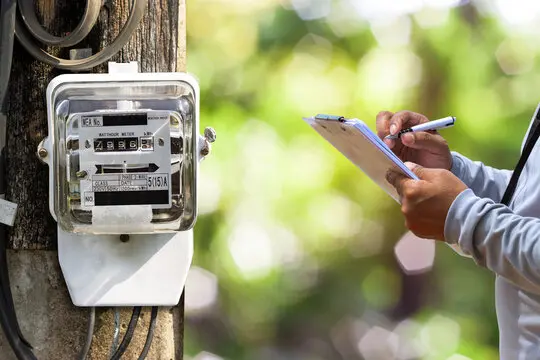
This is also why taking a photograph of the meter display can be useful when reporting a suspected billing problem. A clear photo gives you a record of what the meter displayed on a particular date.
I recommend keeping the photo with the date and time. It takes less than a minute, and if the issue continues into the next billing cycle, you have something concrete to compare.
That habit is useful even if there is no dispute.
MEPCO consumers who regularly monitor their bills also benefit from understanding the newer bill layout. The redesigned MEPCO bill places information such as meter readings, due date and payable amount in a more organized format.
If you are looking at a newer bill and can’t immediately tell which figures matter, don’t rely on the largest number printed on the page. Locate the actual meter-reading fields and the corresponding dates.
3. Four Reasons the Reading Might Look Wrong
Not every unusual reading points to the same problem. I would separate the possibilities before making a complaint.
The meter has continued running after the bill was generated
This is the simplest explanation.
Suppose your bill was prepared using a reading of 2,450 units. A week later, you look at the smart meter and see 2,480.
The extra 30 units represent consumption after the billing reading.
Nothing is wrong with that.
You are comparing different dates
This is closely related but deserves separate attention.
A bill reflects a particular billing cycle. Your meter display reflects the present state of the meter.
If the dates don’t line up, the numbers shouldn’t be expected to line up either.
The meter has a genuine technical problem
Smart meters are still physical metering equipment. Calling something “smart” doesn’t mean it is incapable of failing.
NEPRA’s current Consumer Service Manual contains procedures for defective, slow, and fast metering installations. It also provides for checking the accuracy of a metering installation when a consumer requests it.
If testing establishes that a meter is slow or fast, the rules provide for replacement and adjustment according to the applicable procedure. The current CSM states that a meter found slow or fast is to be replaced immediately or within two billing cycles if a replacement meter isn’t available.
That is very different from simply saying, “My number looks high.”
The bill contains an estimated or defective-meter reading
This is one of the situations that deserves closer attention.
If the meter wasn’t providing a usable reading, billing could involve an average or defective-meter basis under the applicable rules. NEPRA’s CSM contains specific provisions dealing with average billing and defective meters.
So if your bill says or indicates that the reading was estimated, don’t compare it with the live smart-meter display as though both numbers were direct meter readings from the same moment.
This is also why I recommend checking the previous bills before contacting MEPCO. One unusual figure becomes much easier to understand when you can see the pattern over several months.
4. What I Would Check Before Filing a Complaint
If a reader contacted me and said, “My MEPCO smart meter is showing the wrong reading,” I wouldn’t immediately tell them to replace the meter.
I’d ask them to check the records first.
Check the previous bill
Find the previous meter reading and the date on which it was recorded.
Then find the current bill’s reading and date.
Write both down.
Check the actual meter
Take a clear photograph of the current display.
If the meter cycles through screens, wait long enough to identify the accumulated energy reading rather than photographing the first screen you see.
Compare consumption, not just the final number
A high total meter reading doesn’t automatically mean high monthly consumption.
For example:
- Previous billing reading: 5,120
- Current billing reading: 5,390
- Units billed: 270
- Current meter display today: 5,445
The 5,445 figure is not evidence that 325 units were billed.
The billing calculation is tied to the relevant billing readings and dates.
Look at your recent consumption pattern
If your household normally uses around 250 to 300 units and suddenly the bill shows 700, that deserves investigation.
If the bill shows 285 units but the meter display is 310 because the display was checked several days later, there may be no billing error at all.
This is one reason I prefer looking at the pattern rather than reacting to a single number.
For consumers who want to understand why consumption suddenly rises, I have also covered the common causes behind a MEPCO bill doubling in one month.
And if the bill itself contains estimated units, that is a separate issue worth checking rather than assuming the smart meter is defective.
5. Here’s Where People Usually Go Wrong
The most common mistake is treating the current meter display as the meter reading printed on the bill.
They’re not necessarily the same thing.
The second mistake is looking only at units and ignoring the reading dates.
The third is assuming that a smart meter cannot produce a billing dispute. It can. Advanced metering is designed to improve the collection and availability of consumption information, but metering equipment still has to operate correctly and the billing data still has to be handled properly.
NEPRA has dealt with actual disputes involving AMI meters. In one recent FESCO matter, NEPRA examined a case where an AMI meter was found to have recorded less consumption than a backup meter, and the authority discussed the meter’s accuracy and the limits applicable to recovery of disputed consumption.
That case was FESCO, not MEPCO, so I wouldn’t use it as proof that your MEPCO meter is faulty. It does, however, show an important point: AMI technology does not make the possibility of a metering dispute disappear.
If you have a genuine discrepancy, evidence matters.
Keep the bill. Keep previous bills. Photograph the meter. Record the date.
That little file can be much more useful than a complaint saying only, “My bill is wrong.”
6. What Happens If the Meter Really Is Faulty?
If the evidence points toward a defective, slow, or fast meter, the matter should be handled through the applicable MEPCO complaint and metering process.
NEPRA’s current Consumer Service Manual provides procedures for accuracy checking and meter replacement. For a meter that is confirmed slow or fast, the CSM sets out the replacement and billing adjustment framework.
There is also an important distinction between a meter problem and an allegation of unauthorized electricity use.
Those are not the same complaint.
A defective meter concerns the accuracy or functioning of the metering installation. A detection case involves alleged irregularities such as unauthorized abstraction or interference with the metering arrangement, and it follows a different process under the applicable rules. NEPRA’s CSM contains a separate procedure for establishing illegal abstraction and issuing detection bills.
So don’t use the words “faulty meter” and “detection bill” interchangeably.
They describe different situations.
If your concern is specifically about a meter-reading error, you can also see the practical guidance on how to fix a wrong MEPCO meter reading.
7. A Simple Record That Can Save You a Lot of Trouble
I like keeping things simple.
You don’t need a complicated spreadsheet to monitor a household meter. A small monthly record is enough:
Month       Meter Reading       Units Billed       Photo Saved
January     3,420               260                Yes
February    3,688               268                Yes
March       3,951               263                Yes
April       4,215               264                Yes
The exact numbers above are only an example, of course.
What matters is the habit.
If a future bill suddenly shows 600 units, you can immediately look backward and see whether the meter readings support that increase.
And there is another benefit. If you ever need to explain the problem to MEPCO, you’re giving them dates and readings rather than trying to remember what the meter showed three weeks earlier.
For readers using mepcco-bill.pk, I recommend the same basic approach when checking billing information online: don’t look at one month’s amount in isolation. Compare the reading and consumption history.
Small records make confusing bills much easier to understand.
8. When You Should Take the Discrepancy Seriously
A difference between the meter display and your bill isn’t enough on its own.
I would pay much closer attention when several signs appear together.
| Sign | What it suggests |
|---|---|
| Meter is only slightly higher than bill reading | Could simply be later consumption |
| Bill and meter dates don’t match | Normal numbers may look inconsistent |
| Units suddenly jump without a clear reason | Worth investigating |
| Reading appears estimated | Check why an actual reading wasn’t used |
| Meter display behaves abnormally | Possible technical issue |
| Meter reading appears inconsistent over several bills | Stronger reason to request verification |
| Meter is replaced and consumption changes sharply | Keep the old and new meter records |
| You receive a supplementary/detection bill | Treat it as a separate billing issue |
One unusual month doesn’t prove a defective meter.
A repeated pattern is more useful evidence.
This distinction matters because unnecessary assumptions can make a simple billing question much harder to resolve.
9. Don’t Forget the Payment and Arrears Side
Sometimes the reading itself is correct but the consumer thinks the bill is wrong because the payable amount doesn’t match expectations.
That can happen for reasons unrelated to the meter reading, including previous outstanding amounts, adjustments, taxes, surcharges, or payment-status issues.
For example, paying a previous bill does not necessarily mean every amount visible on a subsequent bill represents new electricity consumption.
If you have paid the bill but an arrears amount is still appearing, I have explained the issue separately in why your MEPCO bill can show arrears after payment.
And if a digital payment failed while money was deducted from your account, that is also a payment reconciliation problem, not automatically a meter problem.
Keeping these issues separate makes troubleshooting much easier.
10. The Practical Way to Handle a Reading Dispute
If the numbers still don’t make sense after checking the dates, I’d document the discrepancy before making a complaint.
Have these details ready:
- Your MEPCO reference number or customer information
- Current bill
- Previous one or two bills
- Current meter photograph
- Date and time of the photograph
- Reading shown on the meter
- Reading printed on the bill
- Any previous complaint or meter-replacement record
Then ask for the specific issue to be checked.
Don’t simply say, “The smart meter is wrong.”
Say what doesn’t match.
For example:
“The current bill shows a billing reading of X on date Y, while my previous bill shows Z. The meter currently displays A. Please verify the billing reading and metering record.”
That is a much better complaint because it gives the person reviewing it something concrete to investigate.
MEPCO has customer-service and complaint channels, and its published customer-service material identifies a toll-free customer contact number, 0800-63726.
For serious unresolved disputes, consumers can also review the relevant NEPRA complaint and consumer-affairs procedures.
One final point here: don’t interfere with the meter, its seals, wiring, or connections yourself. If you suspect a technical fault, document it and have the authorized process handle the inspection.
FAQs About MEPCO Smart Meter Readings
Why is my smart meter reading higher than the reading on my MEPCO bill?
The meter continues recording electricity after the billing reading has been captured. Check the reading dates first. A higher current display does not automatically mean the wrong number was used on the bill.
Can a smart meter give an incorrect reading?
Yes. Smart meters are designed to improve metering and billing information, but they remain physical metering equipment and can develop faults. NEPRA’s Consumer Service Manual contains procedures for checking meter accuracy and dealing with slow, fast, and defective meters.
What should I do if my MEPCO bill shows much higher units than my meter history suggests?
Compare the current and previous billing readings, check the reading dates, and review several previous bills. Photograph the current meter display and keep the bill copies before requesting verification from MEPCO.
Does an estimated reading mean my smart meter is faulty?
Not necessarily. An estimated or average bill can arise from a situation where an actual usable meter reading was not available. Check the bill’s reading information and the applicable billing status before concluding that the meter itself has failed.
Can MEPCO recover charges if a meter is found slow?
There are specific rules governing meter slowness and billing adjustments. NEPRA’s current Consumer Service Manual states that, after an accuracy check establishes slowness or fastness, the metering installation is to be replaced immediately or within two billing cycles if a meter isn’t available, with the applicable adjustment framework limited according to the CSM.
A smart meter gives you more information to work with, but you still have to read that information correctly. The number on the screen is only one piece of the record.
When something looks wrong, compare dates, compare readings, save the evidence, then ask for verification. That approach is much more useful than assuming the meter or the bill is automatically at fault.
I keep coming back to that point because it prevents a lot of unnecessary confusion, especially when a newer digital meter makes the situation look more complicated than it really is.