
The interesting part of a MEPCO smart meter isn’t the digital screen.
It is what happens in the background after the electricity has been used.
Instead of having one meter reading collected during a monthly visit, an AMI system is designed to build a much more detailed picture of electricity consumption. At a 15-minute interval, that means a full day can be represented by 96 separate time blocks rather than one number at the end of the month.
That sounds like a small technical change. It isn’t.
For MEPCO, this type of information can help show consumption patterns, identify unusual readings, monitor the distribution network and reduce reliance on manual meter collection. For consumers, it also changes how a meter-reading problem should be understood.
But there is one distinction I want to make at the start. A smart meter being capable of detailed interval data does not mean every piece of information is displayed to the customer every 15 minutes, nor does it mean every MEPCO smart-meter installation uses exactly the same configuration. The meter, communications network, meter data system and billing system all have to work together.
That is where the real story is.
1. What Does “Every 15 Minutes” Actually Mean?
When people hear that a smart meter tracks electricity every 15 minutes, they sometimes imagine the meter taking a photograph of the electricity usage four times an hour.
That isn’t quite what happens.
The meter continuously measures electrical quantities. The AMI system can then organize the measured information into defined time intervals, creating a load or consumption profile that shows how much electricity was recorded during each period.
A 15-minute interval gives 96 intervals in a 24-hour day.
So a day could look conceptually like this:
| Time period | What the system can record |
|---|---|
| 12:00–12:15 | Electricity consumption/load |
| 12:15–12:30 | Electricity consumption/load |
| 12:30–12:45 | Electricity consumption/load |
| 12:45–1:00 | Electricity consumption/load |
| … | … |
| 11:45–12:00 | Electricity consumption/load |
| Full day | 96 time intervals |
The important word here is interval.
It does not mean that your monthly MEPCO bill suddenly contains 96 readings for every day. Billing is a separate process. The interval information is part of the much larger data system behind an AMI installation.
Technical AMI systems commonly use short time intervals for load-profile information, and 15-minute data is a standard way of representing detailed electricity demand. MEPCO’s own planning documentation also refers to hourly or 15-minute load patterns when discussing electricity demand and coincidence factors.
There is another useful point from MEPCO’s procurement work. Its AMR documentation describes meters recording quantities such as voltage and current in their load profile, with the information available through data-retrieval software. MEPCO has also required communication arrangements involving SIMs and meter data systems, showing that the smart-meter setup extends well beyond the physical device on the wall.
So when I say the meter is “tracking” usage, I don’t mean somebody is sitting somewhere watching your meter number change every 15 minutes.
The system is collecting structured data.
2. Where Does the 15-Minute Data Go After the Meter Records It?
This is the part that is easy to miss.
The smart meter is only one component.
A simplified AMI chain looks something like this:
Electricity use → smart meter → communication network → meter data system → validation/processing → billing and operational systems
The meter measures electricity at the consumer’s premises. A communications component then provides a route for information to move toward the utility’s systems.
Depending on the deployed technology and configuration, communications can involve cellular or other communications infrastructure. MEPCO procurement material specifically discusses M2M SIM arrangements, network availability surveys and the creation of meters within vendor meter-data software.
That matters because the phrase “smart meter” is sometimes used as if it describes a single gadget.
It doesn’t.
AMI is an infrastructure.
The physical meter is at the house or business. Behind it are communications, databases, software, data validation and systems used by the distribution company.
This is also why a communications problem does not necessarily mean the meter has stopped measuring electricity.
The meter might continue recording locally even if communication with the central system is temporarily unavailable. Once communication is restored, stored information can potentially be retrieved, depending on the meter and system configuration.
And this is where people usually go wrong.
They see a smart meter and assume that every number on the device must immediately appear on an online screen somewhere. That’s not how utility data systems necessarily work.
There are several stages between measurement and what a consumer eventually sees.
MEPCO’s own procurement material reflects this separation. It refers to meter communication, meter-data collection, validation and software systems rather than treating the physical meter as the complete AMI system.
That distinction becomes especially useful when a consumer receives a bill that looks unusual.
The right question isn’t simply, “Is my meter smart?”
It is, “What reading and billing data were actually used for this bill?”
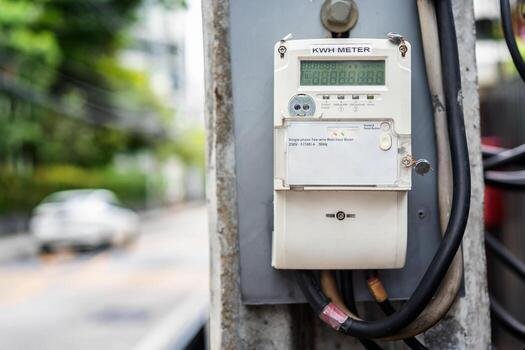
3. Why Would MEPCO Need 15-Minute Consumption Information?
A monthly reading tells you how much electricity was consumed.
It doesn’t tell you much about when that electricity was consumed.
Suppose two homes each consume 600 units in a month.
On paper, they look identical.
But Home A might have relatively steady daytime consumption. Home B might have low daytime use and very heavy evening demand because several air conditioners, a water pump and other appliances operate together.
The monthly total hides that difference.
Interval data exposes it.
A utility can use time-based consumption information to understand demand patterns across consumers, feeders and transformers. Research and utility planning literature on smart metering has long identified frequent consumption data as useful for load forecasting, network planning and understanding transformer loading. A Pakistan-focused energy research source specifically describes 15-minute consumption information as useful for understanding how local transformers are loaded.
That doesn’t mean every 15-minute reading directly changes your bill.
It means the information gives the utility a much better picture of what is happening on the network.
What 15-minute data can tell a utility
| Information | Why it is useful |
|---|---|
| Consumption by time | Shows daily usage patterns |
| Peak demand periods | Helps identify periods of heavy loading |
| Repeated unusual patterns | Can support investigation of abnormalities |
| Feeder-level demand | Helps with distribution planning |
| Transformer loading patterns | Helps identify heavily loaded equipment |
| Historical profiles | Supports forecasting and comparison |
| Meter status/communication information | Helps identify technical problems |
There is a practical reason for this level of detail.
Electricity demand isn’t flat.
A transformer serving a residential area might experience a very different load at 3 PM compared with 8 PM. If the utility only has occasional readings, that pattern is much harder to see.
With interval information, the shape of demand becomes visible.
And that is much more useful than knowing only that the customer consumed 450 units during the entire month.
4. Does a 15-Minute Reading Mean Your Bill Is Calculated Every 15 Minutes?
No.
This is probably the most important distinction in the entire subject.
Meter data and billing data are related, but they are not the same thing.
An AMI meter can produce detailed consumption information while the customer’s bill still presents a normal billing-period total.
Think about a simple example.
Suppose a household has these four 15-minute blocks:
| 15-minute period | Consumption |
|---|---|
| 6:00–6:15 PM | 0.30 kWh |
| 6:15–6:30 PM | 0.45 kWh |
| 6:30–6:45 PM | 0.50 kWh |
| 6:45–7:00 PM | 0.35 kWh |
| Total for one hour | 1.60 kWh |
The system can retain the individual interval information while also calculating larger totals.
That is one of the strengths of digital metering. You don’t have to choose between detailed data and a monthly total.
The billing system can work with the appropriate billing-period information while other systems use interval data for analysis and operations.
This is also why I would not tell a consumer that seeing a smart meter automatically means their bill will display every 15-minute reading. The consumer-facing bill and the utility’s underlying meter data serve different purposes.
The same principle matters when comparing bills.
If your new AMI meter was installed recently, compare the actual meter readings and units, not just the rupee amount.
Tariffs, taxes, surcharges and other billing components can change independently of the meter technology.
For a practical explanation of checking a reading against the number printed on the bill, the guide on MEPCO Meter Reading Wrong? Here Is How to Fix It is useful because it focuses on the actual reading, date and supporting evidence rather than simply assuming that a high bill means the meter is wrong.
5. What Happens if Communication With the Smart Meter Is Lost?
A smart meter still depends on communications infrastructure.
That creates a situation many consumers don’t consider.
The meter may be working perfectly at the property while the communication link temporarily fails.
MEPCO’s procurement documentation recognizes this kind of distinction by specifying communication arrangements and data-system requirements. It also discusses the capability to retrieve scheduled meter data and the conditions under which a meter can be considered muted when successful communication has not occurred for a specified period.
So there are really two questions:
Is the meter measuring?
And:
Is the data reaching the utility’s system?
Those are not necessarily identical.
A temporary communication failure should not automatically be interpreted as lost electricity consumption data. Smart meters are designed with data storage and retrieval capabilities, although the exact behavior depends on the meter model and deployed AMI configuration.
This is one reason technical AMI systems use data validation.
The central system doesn’t simply receive a number and blindly assume everything is perfect. Missing reads, communication problems, abnormal values and other issues can require processing before information is used operationally or for billing.
That is also why the word “automatic” should not be misunderstood.
Automated does not mean unsupervised.
6. Can MEPCO Use 15-Minute Data to Spot Unusual Electricity Use?
It can provide much better information for that purpose.
Imagine a connection that normally has a predictable consumption pattern. Most days look similar, then suddenly the recorded profile changes dramatically.
A detailed interval history makes that change easier to see.
The system might show something like:
Normal day: low morning demand → moderate afternoon demand → high evening demand
Unusual day: sudden sustained demand at an unusual time
That doesn’t prove wrongdoing.
It doesn’t even necessarily prove a meter problem.
Maybe a water pump ran for several hours. Maybe a new air conditioner was installed. Maybe a commercial appliance was connected. Maybe there was a genuine technical fault.
The data is a signal for investigation, not a verdict.
This distinction matters because automated metering is sometimes presented as if the software instantly knows why electricity use changed.
It doesn’t.
The system sees measurements and patterns. People and utility procedures still have to interpret the circumstances.
MEPCO’s AMI rollout page similarly describes the benefits in terms of improved monitoring, better visibility into unusual consumption patterns and improved information about distribution losses, while making clear that technology itself does not eliminate every loss or billing problem.
That is the more realistic way to look at it.
Better data gives MEPCO better evidence.
It doesn’t magically explain every unusual bill.
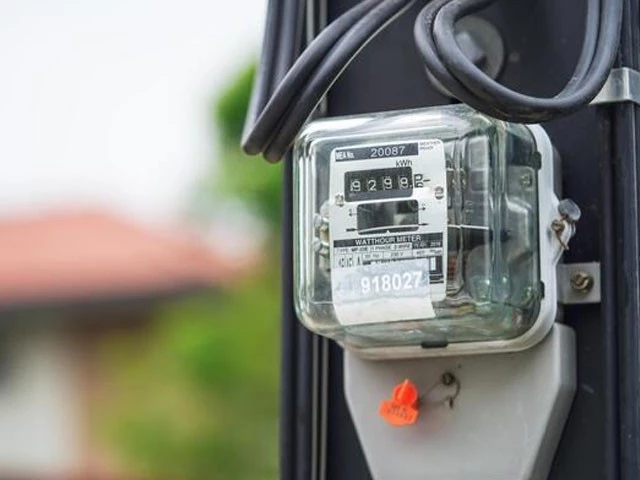
7. What Does This Change for Someone With a New MEPCO Smart Meter?
For the consumer, I would keep things surprisingly simple.
When your conventional meter is replaced, record the old meter number and final reading. Then record the new meter number and opening reading.
Take photographs.
This is one of those small things that feels unnecessary until you need it six months later.
Keep the installation date too.
MEPCO’s smart-meter rollout is taking place in stages, so consumers should not assume every connection has the same equipment or the same deployment status. The supplied MEPCO rollout information describes AMI installation in selected areas and emphasizes that AMI is a wider system rather than merely a digital display.
A simple record is enough:
| Record | Keep it because |
|---|---|
| Old meter number | Identifies the previous meter |
| Old final reading | Establishes the replacement point |
| New meter number | Identifies the AMI meter |
| New opening reading | Creates a new baseline |
| Installation date | Helps establish the billing timeline |
| First smart-meter bill | Useful for comparison |
| Meter photographs | Provides a visual record |
Then check the first few bills.
Don’t obsess over the rupee amount alone.
Look at:
previous reading → present reading → units consumed → billing period → charges
That sequence tells you much more.
If you regularly use mepcco-bill.pk to retrieve your billing information, keeping copies of the bills alongside your meter photographs gives you a useful record when something doesn’t look right.
And if the bill format itself is confusing, the site’s guide to the new MEPCO bill format explains where key billing information appears.
8. Does Smart Metering Mean MEPCO Can See Exactly What Appliance You Are Using?
No.
This is another assumption worth clearing up.
A smart electricity meter measures electrical quantities and consumption. It doesn’t normally sit there and label your activity as “air conditioner switched on” or “washing machine running.”
Detailed electricity patterns can reveal characteristics of household or commercial demand, especially when data is collected at short intervals. But that is different from directly identifying each appliance.
For example, if electricity demand suddenly rises by a certain amount, an analyst might reasonably infer that a significant load has been switched on.
The meter doesn’t necessarily know whether that load is an air conditioner, pump, heater or something else.
This distinction is especially important when discussing privacy. The technical system deals with electricity measurements and associated meter information. How data is accessed, retained and used depends on the utility’s systems, policies and applicable requirements.
So I wouldn’t describe a smart meter as a camera for electricity usage.
It is closer to a detailed measurement and communications device.
9. Where People Usually Misunderstand the 15-Minute Feature
There are a few recurring mistakes.
First, “15-minute tracking means my bill is recalculated every 15 minutes.”
Not necessarily. Interval data can exist underneath a billing system that still produces a conventional billing-period bill.
Second, “The smart meter sends everything instantly.”
Not necessarily. Measurement, storage, communications and central-system processing are separate stages.
Third, “If the online data is missing, the meter must be faulty.”
Not automatically. A communications problem can be different from a measurement problem.
Fourth, “A smart meter guarantees a correct bill.”
No meter technology removes every possible billing-system issue. Billing also involves tariff application, billing periods, adjustments and other components.
Fifth, “Every MEPCO smart meter has exactly the same features.”
That is too broad. Meter models, communications arrangements and deployed infrastructure matter. MEPCO’s procurement documents themselves show that technical requirements and data capabilities are specified as part of particular deployments.
And one small correction to something I see repeated online: “real-time” is used very loosely in electricity discussions. A meter can provide frequent data without every value appearing on a customer’s phone the instant electricity is consumed.
Those aren’t the same thing.
10. Why the 15-Minute View Is More Useful Than a Monthly Number
A monthly figure answers one question:
How many units were consumed?
An interval profile answers another:
How did that consumption happen across the day?
That second question is valuable to a distribution company.
It helps reveal demand peaks, changing usage patterns and network loading. It can support forecasting and operational decisions, while automated meter information can reduce dependence on physical reading processes.
For a consumer, the immediate benefit is less dramatic but still useful.
A detailed digital record creates a stronger trail between actual electricity consumption and the billing system.
If something unusual happens, there is more information available to investigate.
That doesn’t mean a customer should expect to open the MEPCO bill and see thousands of individual interval readings. The useful data can sit behind the ordinary bill.
Think of the monthly bill as the final visible statement, while the AMI system can maintain a much richer record underneath it.
That is the real change.
The move from conventional metering to AMI isn’t simply about replacing a mechanical meter with a screen. MEPCO’s own material and procurement activity show a broader system involving automated collection, communications, data systems and meter information.
And once electricity consumption is recorded in smaller time blocks, a utility can see patterns that a single monthly reading simply cannot show.
For consumers, I would still keep the same habit I’ve recommended for years: save the bill, save the meter information, and compare the numbers when something looks unusual.
Technology gives you more data.
Your records help you make sense of it.
Frequently Asked Questions
Does a MEPCO smart meter really record electricity every 15 minutes?
AMI systems are designed to provide detailed interval consumption data, and 15-minute intervals are widely used for load-profile information. The exact collection and communication configuration depends on the meter and deployed MEPCO AMI infrastructure, so “15-minute data” should not be interpreted as a guarantee that every consumer-facing system displays a reading every 15 minutes.
Will my MEPCO bill show all my 15-minute readings?
No. The ordinary electricity bill normally presents billing-period information rather than listing every individual interval. Detailed meter data can exist within the utility’s AMI and data-management systems without being printed on the bill.
What happens if the smart meter temporarily loses communication?
A communication failure is not automatically the same thing as a meter failure. Smart-meter systems can have local data storage and retrieval mechanisms, while the central system handles communication and validation. The exact behavior depends on the deployed equipment and configuration.
Can MEPCO use smart-meter data to identify unusual consumption?
Detailed interval data makes unusual consumption patterns easier to identify and investigate. However, an unusual pattern by itself doesn’t establish the cause. It could result from changed appliance use, a technical issue, a new load or another legitimate reason.
What should I record when my old MEPCO meter is replaced?
Keep the old meter number, final reading, new meter number, opening reading and replacement date. Take clear photographs of the old and new meter readings and keep your first smart-meter bills for comparison.
For related information about how MEPCO’s smart-meter rollout works, see the MEPCO Rolls Out Smart AMI Meters in Select Areas.

Pingback: Mepcco-Bill Tracks 5 Big MEPCO Changes in 2026 – MEPCO Bill Check 2026