MEPCO Net Metering: What Changed in 2026
The biggest mistake I keep seeing in discussions about MEPCO solar is treating every 2026 update as if it changed the same thing.
The rules changed in stages. NEPRA introduced the Prosumer Regulations, 2026 in February, amendments followed during the year, and another important amendment arrived on August 6. For an MEPCO consumer, that means an article written in February can already be incomplete when someone reads it in September.
I run mepcco-bill.pk to make MEPCO information easier to understand, and solar billing is one of those subjects where a small wording difference can change the practical meaning of the whole explanation.
The short version is this: the 2026 framework moved new prosumers toward a net-billing arrangement, while the August amendment simplified the approval route for distributed-generation facilities of 25 kW or below. Existing agreements also need to be considered separately because transitional provisions apply to certain arrangements made under the earlier rules.
1. The 2026 Change Started With a New Prosumer Framework
NEPRA notified the National Electric Power Regulatory Authority (Prosumer) Regulations, 2026 on February 9, 2026 through S.R.O. 251(I)/2026.
That was the first major change.
The regulations replaced the previous regulatory framework for distributed generation and net metering and introduced the term prosumer for consumers generating electricity through a distributed-generation facility while interacting with the distribution system.
But the word change itself isn’t the important part.
The real difference is the billing mechanism.
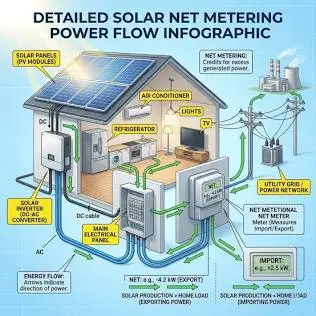
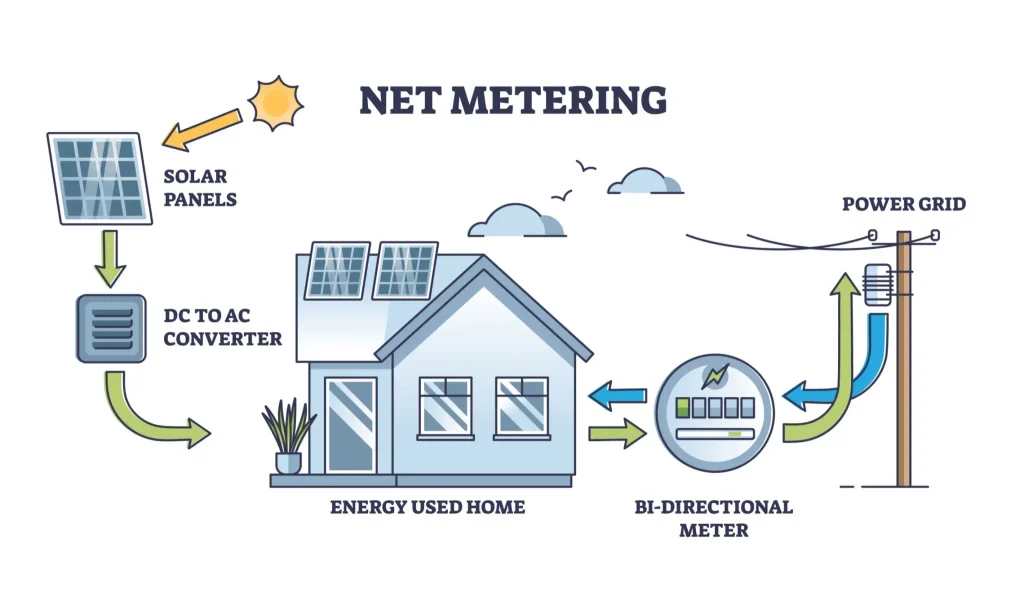
Under Regulation 14, electricity supplied by the distribution licensee to the prosumer is billed according to the applicable tariff. Electricity supplied by the prosumer to the licensee is treated separately and credited at the national average energy purchase price.
So the calculation is no longer as simple as saying:
Imported units – exported units = final units
That shortcut can give a misleading picture of the bill.
The regulations describe this as a net-billing arrangement, where the two directions of electricity flow have different billing treatment.
The basic 2026 position
| Electricity flow | 2026 treatment |
|---|---|
| MEPCO supplies electricity to the consumer | Billed at the applicable tariff |
| Consumer supplies electricity to MEPCO | Credited under the national average energy purchase price mechanism |
| Solar generation used inside the premises | Reduces the amount of electricity that needs to be imported |
| Electricity exported to the grid | Accounted for separately under the prosumer billing mechanism |
| New regulatory framework | NEPRA Prosumer Regulations, 2026 |
That distinction matters because two homes with identical solar capacity can have different bills depending on how much of their generation they consume directly and how much they export.
A household that runs heavy loads during sunny hours may use more of its solar generation directly. Another household might generate electricity during the afternoon and use most of its electricity after sunset.
Same panels. Different consumption pattern.
And that is why I wouldn’t calculate the value of a solar installation simply by multiplying the panel capacity by an assumed export rate.
2. Net Metering and Net Billing Are Not Interchangeable Terms
This is where people usually go wrong.
Many Pakistani solar consumers still use “net metering” as a general term for the whole process. That makes sense because the older system was widely known as net metering.
But the 2026 regulations use a different billing arrangement.
Under Regulation 14, the electricity coming from the distribution licensee is billed at the applicable tariff. Electricity going from the prosumer to the licensee receives credit under the national average energy purchase price mechanism.
That creates two separate sides of the calculation.
Think about a normal afternoon.
Your panels are producing electricity. Your refrigerator, fans, water pump, inverter loads and other appliances are consuming some of it. If the solar system produces more electricity than the premises need at that moment, the surplus can flow toward the grid when the system is properly interconnected.
Later in the evening, your solar production falls while household consumption continues. Electricity then comes from the grid.
The meter records these flows, but the billing rules determine how those flows are valued.
That is the part that gets lost in many social-media explanations.
Solar generation is not automatically the same thing as solar export.
And solar export is not automatically valued in exactly the same way as electricity purchased from MEPCO.
The current NEPRA framework makes that distinction directly relevant to the economics of a new solar connection.
For MEPCO consumers who are also trying to understand their ordinary electricity charges, the applicable tariff remains important. Solar does not remove every component that can appear on an electricity bill.
I would therefore avoid old articles that give one fixed “net-metering rate” without telling you which regulatory period and agreement they are talking about.
Rules move. Agreements have dates. Bills have billing cycles.
Those details matter.
3. The August 2026 Amendment Changed the Approval Route for Smaller Systems
The second major point came on August 6, 2026.
NEPRA’s official record lists S.R.O. 1330(I)/2026 as an amendment to the Prosumer Regulations, 2026. The amendment created a specific exemption from NEPRA concurrence for prosumers with distributed-generation facilities of 25 kW or below. For those qualifying systems, the concerned distribution licensee is responsible for according approval.
For someone in the MEPCO service area, this makes MEPCO’s role especially important.
The practical distinction looks like this:
| Solar/DG situation | Approval position under the August 2026 amendment |
|---|---|
| 25 kW or below | NEPRA concurrence is not required under the new exemption |
| 25 kW or below | Approval is handled by the concerned distribution licensee |
| Above 25 kW | The NEPRA concurrence requirements continue to matter |
| All systems | Applicable technical and interconnection requirements still apply |
The important thing is not to stretch the amendment further than it actually goes.
It does not mean a homeowner can install a 20 kW solar system and connect it to the MEPCO network without following the applicable process.
It changes the approval route.
It does not turn an approved grid connection into an informal connection.
This distinction is easy to miss because headlines naturally focus on the removal of NEPRA concurrence for smaller systems. The actual regulatory change is narrower: qualifying facilities of 25 kW or below are handled through the concerned licensee rather than requiring concurrence from the Authority.
So if you are planning a new MEPCO solar connection, don’t stop reading after the words “25 kW does not need NEPRA approval.”
Look at the whole application and interconnection process.
4. Existing MEPCO Solar Agreements Need a Different Look
Here is another place where old and new information get mixed together.
A person who already has a valid agreement under the earlier framework is not necessarily in the same position as somebody applying for a new connection in late 2026.
The original February regulations contained transitional provisions dealing with approvals, licences and agreements made under the repealed regulations. NEPRA subsequently considered and issued amendments concerning the treatment of existing arrangements. The regulatory record therefore needs to be read according to the date and status of the agreement rather than treating every solar consumer as a new applicant.
This is one reason I would keep your old agreement, approval documents, meter records and previous bills.
Paperwork isn’t exciting, I know.
But when regulations change, those documents tell you which arrangement you actually have.
The key questions are:
- When was the agreement executed?
- Which regulatory framework governed that agreement?
- Is the agreement still valid?
- Has the system capacity been changed?
- Has the connection been modified?
- Which billing mechanism applies to that agreement?
The answer to those questions is more useful than simply saying, “I have net metering.”
That phrase alone doesn’t tell you enough in 2026.
5. What the New Rules Mean for Your MEPCO Bill
The easiest way to understand the practical effect is to stop thinking only about total solar production.
Look at the three different numbers:
1. Solar generation
How much electricity your panels produce.
2. Self-consumption
How much of that solar electricity your home or business uses directly.
3. Grid export
How much excess electricity moves from your premises toward the MEPCO network.
Only the third category represents electricity supplied to the distribution licensee.
That distinction is useful because a solar system can produce a substantial amount of electricity without exporting all of it.
Imagine a house producing 30 units of solar electricity during the day.
If the house uses 22 units while the panels are producing, only the remaining 8 units are available for export, subject to the system and connection conditions.
Then, after sunset, the house may import electricity from MEPCO again.
So the monthly bill isn’t determined simply by looking at the solar generation figure on an inverter app.
This is also why the information published by MEPCO Bill Check should be read alongside the actual bill and, where relevant, the consumer’s agreement.
A website can explain the regulatory framework. Your meter and agreement determine what happened at your particular connection.
That distinction is worth keeping.
6. What a New MEPCO Solar Applicant Should Check
If you are considering solar under the 2026 framework, I would check the basic position before ordering equipment.
First, determine your sanctioned load and the proposed distributed-generation capacity.
The regulations place conditions around distributed-generation facilities, so the size of the solar system should not be selected only because there is enough roof space for more panels.
Second, determine whether the proposed facility is 25 kW or below.
That matters because of the August 6 amendment and the approval route.
Third, understand the billing arrangement before calculating your expected savings.
A quotation from a solar installer might focus heavily on panel capacity, inverter size and annual generation. Those numbers are useful, but they don’t tell the whole financial story.
The timing of your household electricity use matters too.
Fourth, keep your application documents together.
If you are already researching the paperwork, the site’s guide on documents needed for MEPCO net metering is a useful related reference.
And finally, don’t treat a solar quotation as a regulatory document.
Installers can explain equipment and system design, but the applicable regulatory requirements come from the relevant authorities and distribution company.
7. The Simple Mistakes That Cause the Most Confusion
I keep seeing the same few mistakes in 2026 solar discussions.
Mistake 1: Using an old export rate without checking the framework
A rate quoted in an older article may relate to an earlier regulatory arrangement.
The applicable treatment depends on the governing regulations and agreement.
Mistake 2: Thinking 25 kW means no approval is needed
The August amendment removes the requirement for NEPRA concurrence for qualifying systems of 25 kW or below, but the concerned distribution licensee still has an approval role.
Mistake 3: Treating all existing solar customers as new applicants
Existing agreements have their own history and transitional considerations.
Mistake 4: Calculating savings from panel production alone
An inverter showing a large generation figure doesn’t mean the same amount was exported to MEPCO.
Mistake 5: Assuming solar eliminates the entire electricity bill
Imported electricity, applicable tariffs and other bill components still have to be considered.
This last one is surprisingly common.
Someone sees a solar system producing hundreds of units and expects the next bill to show zero. Then the bill arrives with imported units and other charges and the whole system suddenly looks confusing.
The bill is doing what the billing rules require. The mistake was using an oversimplified calculation beforehand.
8. What Has Actually Changed in 2026?
If I had to reduce the 2026 developments to a reference sheet, I’d keep it this simple:
| Date / development | What it means |
|---|---|
| February 9, 2026 | NEPRA notified the Prosumer Regulations, 2026 |
| February framework | Introduced the new prosumer and net-billing framework |
| April 2026 | Further amendments were notified during the year |
| August 6, 2026 | S.R.O. 1330(I)/2026 amended the Prosumer Regulations |
| 25 kW or below | NEPRA concurrence is not required under the August exemption |
| 25 kW or below | Concerned distribution licensee handles approval |
| New billing framework | Imports and exports receive different treatment |
| Existing agreements | Need to be assessed under applicable transitional provisions |
NEPRA’s own legal record confirms that the Prosumer Regulations were amended during 2026 and specifically lists the August 6 notification.
That timeline is more useful than treating “the 2026 net-metering rule” as one single announcement.
There were several developments.
And the year isn’t finished yet, so I would check the latest NEPRA notification before making a significant change to an existing solar connection.
9. What MEPCO Consumers Should Keep in Their Records
One small practical habit saves a lot of confusion later.
Keep copies of:
- Your solar application
- Approval or concurrence documents, where applicable
- Interconnection agreement
- Solar system capacity details
- Inverter information
- Meter installation records
- Previous MEPCO bills
- Current MEPCO bills
- Any correspondence with MEPCO
- Documents relating to later system modifications
This might feel excessive when everything is working normally.
It isn’t.
When a regulatory framework changes, the history of your connection becomes important.
A new applicant in September 2026 and a consumer who signed an agreement years earlier should not automatically be treated as having the same regulatory position.
That is probably the single most useful point I would leave with an MEPCO solar consumer.
Frequently Asked Questions
Does MEPCO still have net metering in 2026?
The 2026 regulatory framework is based on the NEPRA Prosumer Regulations, which use a net-billing arrangement for prosumers. Electricity supplied by the distribution licensee is billed at the applicable tariff, while electricity supplied by the prosumer is credited under the national average energy purchase price mechanism.
Do I need NEPRA concurrence for a 20 kW solar system?
Under the August 6, 2026 amendment, a distributed-generation facility of 25 kW or below does not require concurrence from NEPRA. The concerned distribution licensee handles approval under the amended framework.
Does the 25 kW exemption mean I can connect solar without MEPCO approval?
No. The exemption concerns NEPRA concurrence. The concerned distribution licensee still has an approval role, and applicable interconnection and technical requirements continue to matter.
Are old net-metering agreements automatically treated exactly like new 2026 applications?
Not necessarily. The 2026 regulations include transitional provisions concerning arrangements made under the earlier framework, and subsequent amendments addressed the treatment of existing agreements. The agreement date and current status therefore matter.
Is exported solar electricity valued the same as electricity imported from MEPCO?
No. Regulation 14 separates the two sides. Electricity supplied by the licensee is billed at the applicable tariff, while electricity supplied by the prosumer to the licensee is credited according to the national average energy purchase price mechanism.
The 2026 changes are easier to understand once the dates are kept separate. February introduced the new Prosumer Regulations, later amendments modified the framework, and the August change simplified the approval route for smaller distributed-generation facilities.
For an MEPCO consumer, the safest approach is to check the rule that applies to your actual connection, not simply the oldest article that appears in a search result.
For more MEPCO consumer information, visit the MEPCO Bill Check homepage.