MEPCO Net Metering NOC Delayed? Here Is Why
A MEPCO solar application can feel strangely slow when you have already submitted the paperwork, installed or planned the system, and are waiting for the approval to move forward.
The confusing part is that people still use the phrase “net metering NOC” as if there is one single document, one office, and one fixed waiting period. The 2026 rules changed the approval structure, so that description no longer fits every application.
For new applicants, the date and capacity of the proposed solar system matter. So does the distinction between NEPRA concurrence and approval by the relevant distribution licensee.
That distinction is especially important for MEPCO consumers.
1. Why a MEPCO Net Metering NOC Can Seem Delayed
The first thing I would check is what the applicant actually means by “NOC.”
People use that term loosely. One person might be talking about regulatory concurrence, another might mean the distribution company’s approval, and someone else might simply mean the complete solar interconnection process.
Those are not necessarily the same thing.
NEPRA notified the Prosumer Regulations, 2026 on February 9, 2026. The regulations established a new framework for consumers generating electricity through distributed generation, including solar systems connected to a distribution system.
Then the rules were amended during the year.
NEPRA’s legal record lists amendments to the 2026 Prosumer Regulations in April and again in August. The August 6 notification is particularly relevant to smaller systems because it changed the approval requirement for distributed-generation facilities of 25 kW or below.
So if someone tells you, “Your NEPRA NOC is delayed,” I would not accept that sentence as the full explanation.
First ask:
Is NEPRA concurrence actually required for this application?
For a qualifying system of 25 kW or below under the August 2026 amendment, it is not. The concerned licensee is responsible for granting approval.
For a MEPCO consumer, that makes the distribution company part of the practical approval route.
And this is where older guides can create unnecessary confusion.
2. The August 2026 Rule Changed the Approval Route
The August amendment is short, but the practical wording matters.
NEPRA’s notification dated August 6, 2026 says that a prosumer with a distributed-generation facility of 25 kW or below does not have to seek concurrence from the Authority. Instead, the concerned licensee accords the approval.
Here is the simple version:
| Solar system situation | Approval position under the August 2026 amendment |
|---|---|
| Distributed generation up to 25 kW | NEPRA concurrence is not required |
| Up to 25 kW | Concerned licensee gives approval |
| Above 25 kW | The 25 kW exemption does not apply |
| Grid-connected solar | Applicable technical and interconnection requirements still matter |
That last row is worth keeping.
The removal of NEPRA concurrence for qualifying systems does not mean a homeowner can install a solar system and connect it to the MEPCO network without following the applicable process.
The amendment changes the approval route. It does not erase the technical requirements for connecting generation to the distribution system.
This is probably the easiest place for an applicant to misunderstand the new rules.
Someone sees “NEPRA approval not required” and reads it as “no approval required.”
Those are two very different statements.
3. Your Application May Be Waiting at a Different Stage
When a solar applicant says the NOC is delayed, I would look at the application as a series of stages rather than one giant approval.
The paperwork can involve the consumer’s existing electricity connection, proposed distributed-generation capacity, technical information, interconnection arrangements, inspection or verification requirements, and the applicable approval or concurrence route.
That means a delay at one stage does not automatically mean NEPRA is holding the application.
For a MEPCO consumer, it is useful to know exactly which stage has been completed.
A simple record like this can make the situation much clearer:
Application submitted → documents checked → technical process → approval/concurrence stage → agreement/interconnection → meter or connection work
The exact process and documents applicable to a particular connection should be confirmed through the relevant current MEPCO and regulatory requirements rather than an old installer checklist.
I would also keep the submission date.
This sounds basic, but it matters. If you later need to ask about the status of an application, “I submitted it sometime last month” is much less useful than having the application copy, receipt, reference number, and submission date together.
The same record-keeping approach is useful for ordinary electricity billing. MEPCO consumers who are comparing their bills before and after solar should keep copies of their previous statements rather than relying on memory.
The site’s guide on MEPCO Old Bill History is useful for understanding the importance of keeping those records.
4. The 25 kW Limit Is Not a Small Detail
A solar system close to 25 kW deserves extra attention.
The August 2026 amendment specifically says that a prosumer with a distributed-generation facility of 25 kW or below does not need concurrence from NEPRA, while the concerned licensee provides approval.
So capacity is not just an equipment specification for the installer.
It affects the regulatory route.
For example, a homeowner discussing a system with an installer might hear, “Your system is around 25 kW, so the NEPRA NOC isn’t needed.”
That statement should immediately lead to another question:
What is the actual capacity of the distributed-generation facility being submitted in the application?
Don’t rely only on the number of solar panels.
The inverter configuration, proposed system details, and the capacity used in the official application are more useful than a casual description such as “about 25 kW.”
And if the proposed system is above the threshold, don’t assume the same exemption automatically applies.
This is one of those places where five minutes spent checking the actual paperwork can prevent weeks of confusion later.
5. Existing Solar Agreements Are a Different Situation
Here is where people usually go wrong.
A new applicant reads the 2026 rules and assumes that an older solar connection must now follow exactly the same billing and approval treatment.
The transition from the older net-metering framework to the 2026 Prosumer Regulations makes that assumption unsafe.
The February 2026 regulatory material included transitional treatment for existing arrangements. NEPRA’s published amendment material states that valid agreements executed under the repealed regulations continue to be billed according to the earlier rate and mechanism until the expiry of those agreements, subject to the applicable provisions.
That means the date of an existing agreement matters.
It is not enough to say:
“I have MEPCO net metering.”
You need to know when the arrangement was approved, what agreement governs it, and which regulatory framework applies to it.
This distinction also explains why two MEPCO solar consumers can describe very different experiences while both are using grid-connected solar.
One may be operating under an older valid agreement.
Another may be applying under the 2026 Prosumer Regulations.
The word “net metering” gets used for both conversations, but the regulatory history underneath them is different.
I would keep the original agreement somewhere safe, along with the approval documents and meter information. Digital copies are worth keeping too.
6. Why the 2026 Billing Change Adds More Confusion
There is another reason people sometimes connect a delayed NOC with their expected solar bill.
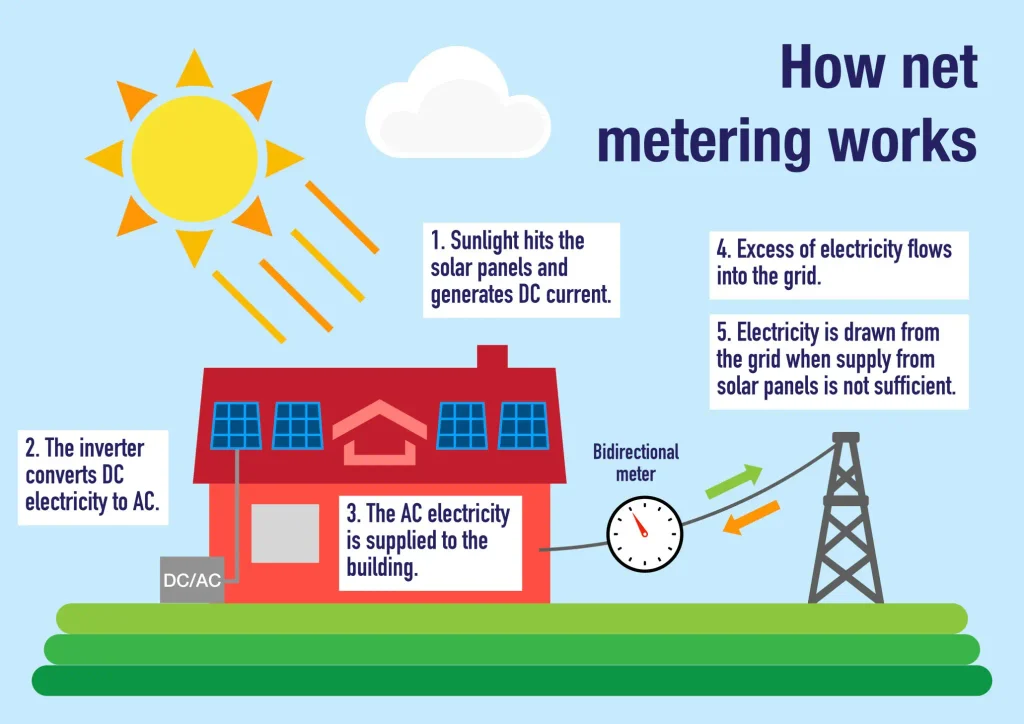
The 2026 framework is not simply a continuation of the old idea that imported and exported electricity are always valued in exactly the same way.
The Prosumer Regulations define the applicable tariff and the arrangements for electricity supplied between the prosumer and the distribution licensee.
The current MEPCO site’s explanation of the 2026 framework describes the arrangement as net billing, with electricity supplied by the distribution licensee billed at the applicable tariff and electricity supplied by the prosumer to the licensee treated under the applicable National Average Energy Purchase Price mechanism.
That matters because some applicants still calculate solar savings using an old one-for-one assumption.
For example:
Solar export = grid consumption
That is too simple as a description of the 2026 arrangement.
Your household’s daytime consumption, evening consumption, solar generation, exported electricity, tariff category, taxes, fixed charges and applicable billing mechanism all affect the final bill.
The site’s guide on What Happens to Your MEPCO Bill After Solar Export goes into this part of the calculation in more detail.
And this is a useful distinction to make while an application is pending: an approval delay and a future billing calculation are two separate issues.
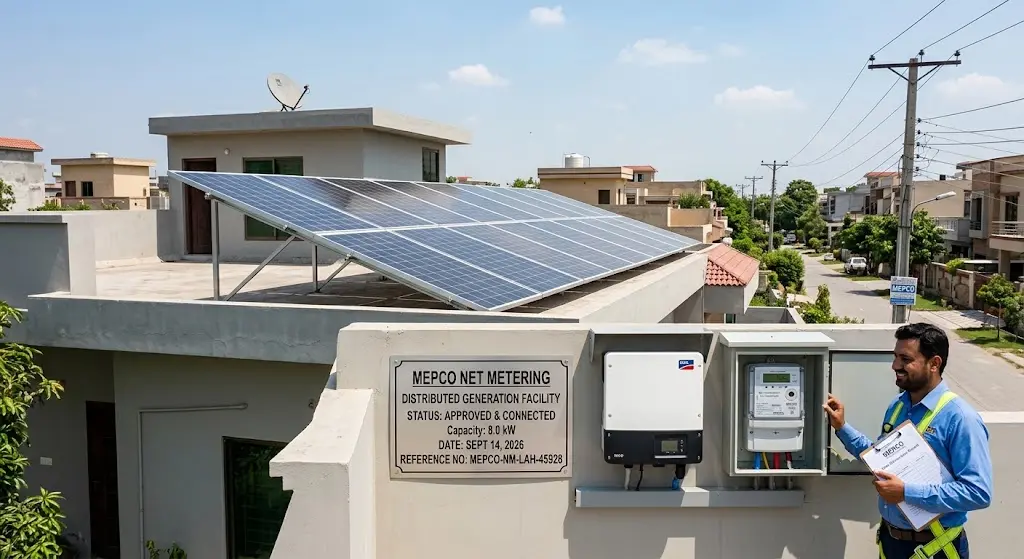
7. What to Check If Your MEPCO Application Is Taking Longer Than Expected
I would work through the paperwork in this order.
1. Check the proposed system capacity.
Confirm whether the distributed-generation facility is 25 kW or below. The August 2026 amendment makes this threshold directly relevant to the approval route.
2. Check what you have actually applied for.
Don’t rely on the phrase “NOC.” Look at the application and identify whether the pending item is approval, concurrence, an agreement, technical verification, or another part of the interconnection process.
3. Keep the application reference and submission date.
This is the easiest information to lose and one of the most useful when checking a pending application.
4. Compare the current requirements with your documents.
Rules changed during 2026. NEPRA’s legal page currently lists the February Prosumer Regulations and subsequent April and August amendments.
5. Ask the relevant office which stage is pending.
Instead of asking only, “Why is my NOC delayed?”, ask which specific approval or processing stage is outstanding.
That question is much easier to answer.
6. Keep copies of everything.
Application, agreement, approval, identification documents, electricity bill, meter information and any correspondence should stay together.
I know this sounds like boring paperwork advice. It is. But when an electricity application gets stuck, boring paperwork is usually more useful than a screenshot forwarded five times on WhatsApp.
And if the application was submitted under an earlier regulatory arrangement, the date becomes even more important.
8. Three Common Mistakes Around a Delayed NOC
The first mistake is assuming that every solar applicant still needs a NEPRA NOC.
For qualifying distributed-generation facilities of 25 kW or below, the August 2026 amendment specifically removes the requirement for NEPRA concurrence and gives the concerned licensee the approval role.
The second mistake is assuming that removing NEPRA concurrence removes the whole approval process.
It doesn’t.
The distribution licensee still has a role, and the connection remains subject to the applicable requirements.
The third mistake is mixing up a new application with an older solar agreement.
Existing valid arrangements can have transitional treatment under the 2026 regulatory framework.
These mistakes sound small, but they lead to very different expectations.
Someone who believes a NEPRA NOC is mandatory for every 10 kW or 15 kW application may spend time waiting for something the current rules no longer require.
Someone who believes no approval is required at all may install equipment before completing the required grid-connection process.
Neither assumption is helpful.
9. What You Should Keep While Waiting
If your MEPCO solar application is still being processed, I would keep a small file containing:
| Record | Why it matters |
|---|---|
| Recent MEPCO bill | Confirms the existing electricity connection |
| Application copy | Shows what was actually submitted |
| Application/reference number | Useful for status checks |
| System capacity details | Helps determine the applicable regulatory route |
| Solar/inverter documents | Supports the technical record |
| Agreement or approval documents | Establishes the governing arrangement |
| Correspondence or receipts | Creates a timeline of the application |
| Previous electricity bills | Useful for later billing comparisons |
There is no need to make this complicated.
A clearly named folder on your phone or computer is enough to start. If the application later involves a dispute or correction, having the original records is much better than trying to reconstruct the entire process from memory.
This is also why I prefer using the actual notification date when discussing MEPCO solar rules on mepccobill.pk. The framework changed during 2026, and a guide written several months earlier may not describe the same approval route.
The current NEPRA legal record confirms the sequence: the Prosumer Regulations were notified in February, an amendment was listed in April, and another amendment was notified on August 6, 2026.
A Practical Way to Think About the Delay
A delayed MEPCO net-metering NOC does not automatically mean that NEPRA is sitting on every application.
For a distributed-generation facility of 25 kW or below, the August 2026 amendment removed the need for NEPRA concurrence and assigned approval to the concerned licensee.
So the first thing to establish is what approval your application actually requires.
Then check the capacity.
Then check the date and status of the application.
Then check whether the issue is regulatory, technical, documentary, or simply another stage of the interconnection process.
That approach is much more useful than treating every delay as a generic “NOC problem.”
The rules changed in 2026, and the terminology people use hasn’t always caught up with them.
For an MEPCO consumer, the paperwork in front of you is therefore more useful than an old social-media post or a solar quotation prepared under a previous set of rules. Keep the documents, check the applicable notification, and make sure you know which part of the approval process is actually pending.
FAQs
Is a MEPCO net metering NOC still required for a 10 kW solar system?
Under the August 6, 2026 amendment, a prosumer with a distributed-generation facility of 25 kW or below is not required to seek NEPRA concurrence. The concerned licensee is responsible for according approval.
Does no NEPRA concurrence mean no approval is needed?
No. The amendment changes the approval route for qualifying systems. It does not mean that a solar system can be connected to the distribution network without following the applicable technical and interconnection requirements.
Why is my solar application still delayed if my system is below 25 kW?
The 25 kW rule concerns the requirement for NEPRA concurrence. An application can still involve other processing stages, documents, technical requirements or approval steps handled by the concerned distribution licensee.
What if I already have an old MEPCO net-metering agreement?
Existing valid agreements require separate consideration. Transitional provisions in the 2026 regulatory framework address qualifying agreements executed under the repealed regulations, including continued treatment under the earlier rate and mechanism until the agreement expires, subject to the applicable provisions.
Has NEPRA changed the solar rules more than once in 2026?
Yes. NEPRA’s current legal record lists the February 2026 Prosumer Regulations and subsequent amendments, including S.R.O. 709(I)/2026 dated April 28 and S.R.O. 1330(I)/2026 dated August 6.
For the most current regulatory position, check the applicable NEPRA notification and the requirements of the relevant distribution licensee rather than relying on an older “net metering NOC” checklist.