Solar is cheaper than grid electricity only after you have paid for the solar system.
That sounds obvious, but it is where many homeowners get the calculation wrong. They see a lower electricity bill, hear that solar panels can last for decades, and start treating the entire purchase as if the panels themselves are the investment.
They aren’t.
A solar installation is a package of panels, an inverter, mounting structure, wiring, protection equipment, installation work, and, depending on the setup, batteries and the costs associated with connecting to the grid. The price you see in an advertisement is not always the price you will eventually pay.
I have seen enough MEPCO-related billing questions to know where the confusion starts. People compare a monthly electricity bill with the price of a solar package and immediately calculate a payback period. That skips several pieces of the calculation.
So let’s look at the real cost instead.
1. The Number on the Solar Quotation Is Only the Starting Point
For a normal household, there are three broad choices: an on-grid system, a hybrid system, or a hybrid system with enough battery storage to provide substantial backup.
The difference matters more than the brand name printed on the quotation.
Current Pakistani market guides put complete 5 kW installations into a fairly wide range because the final price depends on equipment, inverter type, structure, installation and whether batteries are included. Recent 2026 market estimates range from roughly Rs. 600,000 for a basic on-grid installation to well above Rs. 1 million for a hybrid system with lithium storage. These are market estimates, not official government prices, so a homeowner should use them as a quotation-checking reference rather than a guaranteed rate.
A useful way to think about the purchase is this:
| Cost area | What you are actually paying for |
|---|---|
| Solar panels | The modules producing DC electricity |
| Inverter | Converts and manages the electricity for household use |
| Mounting structure | Roof-mounted support system |
| DC/AC wiring | Cables, connectors and related electrical work |
| Protection equipment | Breakers, fuses, earthing and other safety components |
| Installation | Labour, mounting, connections and commissioning |
| Battery | Backup storage, only when included |
| Grid connection work | Relevant where an approved grid-connected arrangement is being installed |
| Maintenance/replacement | Future costs that do not appear in the original quotation |
This is why two 5 kW quotations can look almost identical on paper but have a large difference in price.
The panels might be similar. The inverter might not be. The structure might use different material. One installer might include proper protection equipment while another gives you a very basic package.
And sometimes the cheapest quotation is simply missing things.
That is the part worth checking before signing.
2. On-Grid Solar Is Not the Same Purchase as Battery Solar
This is probably the biggest distinction a buyer needs to make.
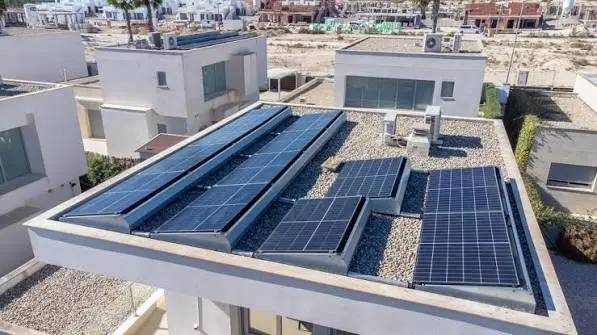
An on-grid system is designed primarily to reduce the electricity you purchase from the distribution grid. During sunlight hours, your solar generation serves your household load first. Depending on the approved arrangement and applicable rules, surplus electricity can be exported to the grid.
A hybrid system adds battery storage.
That battery changes the economics.
You are no longer paying only for panels and an inverter. You are paying for the ability to store electricity and use it later, including during outages or after sunset.
That convenience is valuable, but it isn’t free.
For a household that mainly wants to reduce its monthly MEPCO bill and already has relatively reliable grid supply, spending heavily on batteries deserves a separate calculation. A household that wants backup during outages has a different requirement.
This is why I wouldn’t ask an installer only, “How much is a 5 kW system?”
I’d ask:
“How much is the system I actually need, with every component included?”
Those are two different questions.
Current 2026 market guides show this clearly. Indicative pricing for a 5 kW on-grid installation is materially below many 5 kW hybrid packages once lithium storage is added. The exact difference varies by battery capacity, inverter and equipment quality.
There is another small detail people forget. A 5 kW system does not mean you have five kilowatts of electricity available every hour of the day. Solar generation changes with sunlight, weather, panel orientation, temperature and other site conditions.
So don’t buy a system simply because the number sounds right.
Look at your actual electricity consumption.
3. Your MEPCO Bill Tells You More Than the Installer’s Sales Pitch
Before asking for quotations, pull out several recent MEPCO bills.
Look at the units consumed, not just the rupee amount.
This distinction matters because electricity prices include taxes, adjustments and other billing components. A particularly expensive month does not automatically mean that your home suddenly needs a much larger solar system.
Suppose your home has one month at 350 units, another at 470, another at 620, and then 400 again.
That pattern tells you much more than saying, “My bill was Rs. 70,000 once.”
The solar system should be sized around your electricity use and the way that electricity is consumed.
For example, a household that uses a large portion of its electricity during the daytime has a different solar requirement from a household that consumes most of its electricity after sunset.
Air conditioners make this especially obvious.
A home that runs several ACs through the afternoon is using solar generation at exactly the time the panels are producing. A home where everyone returns after sunset has a larger storage or grid-dependence question.
This is also why a solar quotation should show the expected system capacity, panel specifications, inverter specification and battery capacity separately.
If the installer gives you one number and says “complete package,” ask for the breakdown.
If you’re still trying to understand the numbers on your existing bill, the MEPCO Bill Format guide is useful because knowing your meter readings and billing details comes before making a sensible consumption estimate.
And yes, keep your old bills.
They are useful records when comparing your consumption before and after installation.
4. Net Metering Has Changed the Calculation
This is the part where an older solar article can become misleading very quickly.
Pakistan’s regulatory framework for distributed solar changed in 2026. NEPRA notified the National Electric Power Regulatory Authority (Prosumer) Regulations, 2026 in February, replacing the earlier framework, and NEPRA’s official site records further amendments during 2026, including an amendment notified in August.
That means you should be careful with old statements such as “solar exports are credited exactly like the electricity you buy” or payback claims based on an older arrangement.
The economics of exporting electricity depend on the applicable regulatory mechanism and the agreement governing the prosumer connection.
For an MEPCO consumer considering solar today, the practical lesson is simple:
Do not calculate your return using an old net-metering article from several years ago.
Check the rules that apply to your application and agreement at the time you proceed.
The regulatory side matters because solar has two separate financial benefits.
The first is electricity you generate and consume yourself.
The second is electricity that goes to the grid.
Those two things should not automatically be treated as having identical financial value.
This is one reason self-consumption deserves attention. If your solar system produces electricity while your house is actively using electricity, that generation directly reduces what you need from the grid. Export arrangements are a separate part of the calculation.
MEPCO consumers should therefore keep an eye on current regulatory information rather than relying on screenshots or WhatsApp messages from installers.
MEPCCO-Bill.pk also tracks MEPCO-related changes, but for regulatory decisions, the official NEPRA notification remains the source to check.
5. Here’s Where People Usually Go Wrong
The most common mistake is calculating solar payback from the gross electricity bill.
Imagine someone pays Rs. 60,000 one month.
They install solar and later pay Rs. 10,000.
It is tempting to say, “I saved Rs. 50,000.”
Not necessarily.
The comparison needs to account for the electricity actually offset, the structure of the bill, seasonal consumption, solar generation, exported electricity where applicable, and the cost of the solar system itself.
There is another mistake that comes up repeatedly: buying more panels than the household needs because the seller says bigger is better.
Bigger is not automatically better financially.
If a household has a modest daytime load but installs a very large system primarily to export excess generation, the financial result depends heavily on the applicable export and billing rules.
Then there is the battery mistake.
A battery can be extremely useful. But if you buy a large battery mainly because “solar should work at night,” you have increased the initial investment substantially. The correct question is not whether batteries are good. The question is whether the amount of backup you are buying makes financial and practical sense for your household.
And don’t forget the inverter.
People spend a lot of time comparing panel wattage, then treat the inverter as an afterthought. That is backwards. The inverter is a central part of the system, and its specification should match the system design and your intended operating mode.
6. A More Honest Way to Calculate Your Solar Cost
I prefer a simple calculation before looking at any promised payback period.
Write down these figures:
A. Complete installation cost
Include panels, inverter, structure, wiring, protection equipment, labour and any other installation charges.
B. Battery cost
If you need backup, write this separately rather than hiding it inside the package price.
C. Grid-related and application costs
Ask the installer exactly what is included and what you will have to pay separately.
D. Current annual electricity spending
Use your actual bills, preferably across a full year.
E. Expected self-consumption
Estimate how much solar electricity your household will actually use directly.
F. Expected export
Only calculate this using the applicable current regulatory arrangement.
Then you have something useful to compare.
For example:
| Question | Why it matters |
|---|---|
| What is my annual consumption? | Determines the scale of the system |
| How much do I use during daylight? | Shows potential for direct solar consumption |
| Do I need backup? | Determines whether battery storage is justified |
| What is the complete installed price? | Prevents hidden-cost surprises |
| What equipment brands/models are included? | Helps compare quotations properly |
| What happens to surplus generation? | Important for the financial calculation |
| What regulatory arrangement applies? | Prevents outdated payback assumptions |
This calculation is less exciting than a salesperson promising a two-year return.
It is also much more useful.
7. Panels Are Not the Only Thing Sitting on Your Roof
There is a physical cost to solar as well.
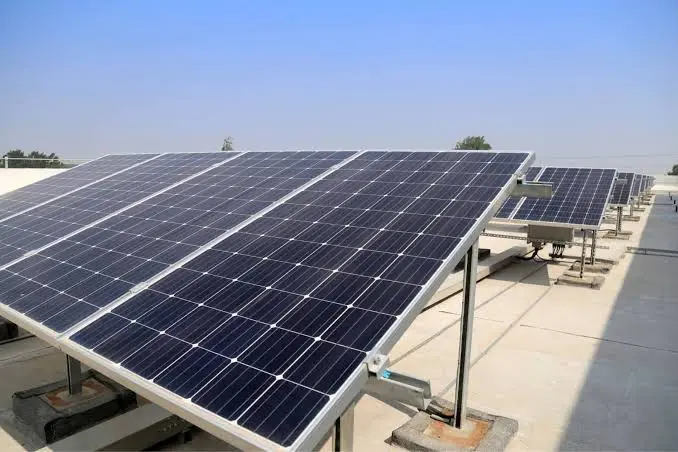
Your roof needs enough usable, reasonably unshaded space. The installer needs to consider panel placement, structure, access, wiring routes and maintenance access.
A quotation based only on the number of panels doesn’t tell you whether the proposed installation is properly designed.
Panel wattage has also increased, which means modern systems can achieve a given capacity with fewer modules than older designs. Current market guides list residential modules in the roughly 540W to 600W-plus range, depending on the model and supplier.
But fewer panels doesn’t mean the entire system becomes proportionally cheaper.
You still need an inverter, mounting system, electrical protection, cables, installation and proper commissioning.
The roof itself can add cost too.
A simple flat concrete roof is not necessarily priced the same as a difficult installation with unusual structure requirements, awkward cable routes or significant shading.
And this is one of those details that gets ignored because it isn’t visible in the shiny solar quotation.
The panel is visible.
The engineering behind it is not.
8. Solar Should Be Bought as an Electrical System, Not a Box of Panels
When someone tells me the price of a solar system, the first thing I want to know is what is actually inside that price.
Not just the number.
If an installer quotes Rs. 750,000, I want to know the panel model, panel quantity, inverter model, mounting material, cable specifications, protection equipment, earthing arrangement, installation scope and warranty terms.
If there is a battery, I want its usable capacity and model too.
If there is a grid connection component, I want to know which charges are included and which are not.
This level of detail makes quotations much easier to compare.
It also protects you from a very common situation where one installer gives a low price by leaving out items that another installer has already included.
A cheaper quotation isn’t necessarily cheaper.
It might simply be shorter.
If your electricity meter reading or bill looks wrong before you even start the solar process, deal with that first. MEPCO consumers who suspect an incorrect reading can also review the practical guidance on wrong MEPCO meter readings before using old bills for system sizing.
That little bit of preparation can save a lot of confusion later.
9. The Real Solar Cost Is the Cost You Still Pay After Installation
Solar doesn’t make every electricity-related expense disappear.
There is still an inverter that eventually ages.
There are electrical connections that need inspection.
There is cleaning and general system maintenance.
Batteries have a finite service life, and replacement cost matters much more in a hybrid installation than in a basic on-grid system.
The original solar quotation is therefore only one part of ownership cost.
This doesn’t mean solar is a bad investment. It means the investment should be judged honestly.
For many households, reducing dependence on grid electricity can make good financial sense. The exact result depends on system price, electricity consumption, self-consumption, applicable export rules, financing if any, equipment life and future electricity prices.
That is why I am cautious about giving readers one universal “solar pays back in X years” number.
Your house is not my house.
Your electricity consumption isn’t the same as your neighbour’s, and the regulatory arrangement in force when you install the system matters too.
10. What I Would Check Before Paying a Solar Installer
I would keep the final checklist very simple.
Get at least two or three detailed quotations.
Make sure the quotations use comparable system sizes and comparable equipment.
Ask for the exact panel and inverter models, not just “Tier-1 panels” or “5 kW inverter.”
Ask what the price excludes.
Ask what happens during a power outage.
Ask whether a battery is included, and if so, exactly how much usable storage it provides.
Ask how surplus generation is treated under the current applicable arrangement.
Ask who handles the grid-connection paperwork and which fees remain your responsibility.
And keep copies of your MEPCO bills before installation.
There is nothing wrong with getting a solar quote from a salesperson. Just don’t let the salesperson become the person doing your financial calculation.
That part belongs to you.
The same approach I use when looking at a MEPCO bill applies here: separate the numbers first, then decide what they actually mean.
Solar can reduce electricity costs, but the real saving begins with buying the right system rather than simply buying the biggest system you can afford.
One final point. Rules around distributed solar are not frozen forever. NEPRA’s own 2026 record shows amendments to the Prosumer Regulations during the year, so anyone planning a new grid-connected solar installation should verify the applicable rules and charges before making the final payment.
That’s a much safer way to look at the “real cost” of going solar.
Frequently Asked Questions
Is a 5 kW solar system enough for an MEPCO home?
It depends on your actual electricity consumption and when you use electricity. A 5 kW label by itself doesn’t tell you whether the system is correctly sized. Review several months of MEPCO units before choosing the capacity.
Is a hybrid solar system worth the extra money?
It depends on whether you need backup and how much electricity you want available after sunset or during outages. If backup is not a priority, adding a large battery simply to make the package look more complete may not be the best financial choice.
Does solar completely eliminate the MEPCO bill?
Not necessarily. A solar installation can substantially reduce electricity purchased from the grid, but the final bill depends on consumption, system performance, billing components and the applicable grid-export arrangement.
Should I calculate solar payback using my current MEPCO bill?
Use your bills as the starting point, but don’t simply divide the total system price by your current monthly bill. Separate actual electricity consumption, direct solar use, export treatment, system cost and other billing components before estimating savings.
Have the solar and net-metering rules changed in 2026?
Yes. NEPRA notified the Prosumer Regulations, 2026 and subsequently recorded amendments during 2026. Anyone applying under the current framework should check the applicable official rules rather than relying on an older net-metering calculation.
I keep coming back to one simple point: the best solar quotation isn’t the one with the lowest number. It is the one where you understand what every major rupee is buying.
For MEPCO consumers, that clarity matters just as much as the panels on the roof.
For more practical MEPCO billing information, you can also review the guide on MEPCO bill payment methods.