A common mistake I keep seeing in solar discussions is treating “solar” as one single setup. It isn’t.
A house with solar panels connected to the MEPCO grid is solving a different problem from a house that runs independently with batteries. The panels might look identical on the roof, but the electricity bill, backup arrangement, approvals, equipment and long-term economics are quite different.
This matters even more in 2026 because the rules for new grid-connected solar systems have changed. NEPRA notified the Prosumer Regulations, 2026 on February 9, moving new arrangements to a net-billing framework. Under that framework, electricity imported from the distribution company is billed at the applicable tariff, while electricity supplied back to the grid receives credit at the national average energy purchase price.
So if you’re a MEPCO consumer deciding between grid-connected solar and an off-grid system, don’t start with the question, “Which one is cheaper?”
Start with how you actually use electricity.
1. The Two Systems Solve Different Problems
MEPCO net metering, more accurately discussed under the current prosumer framework, keeps your home connected to the electricity grid.
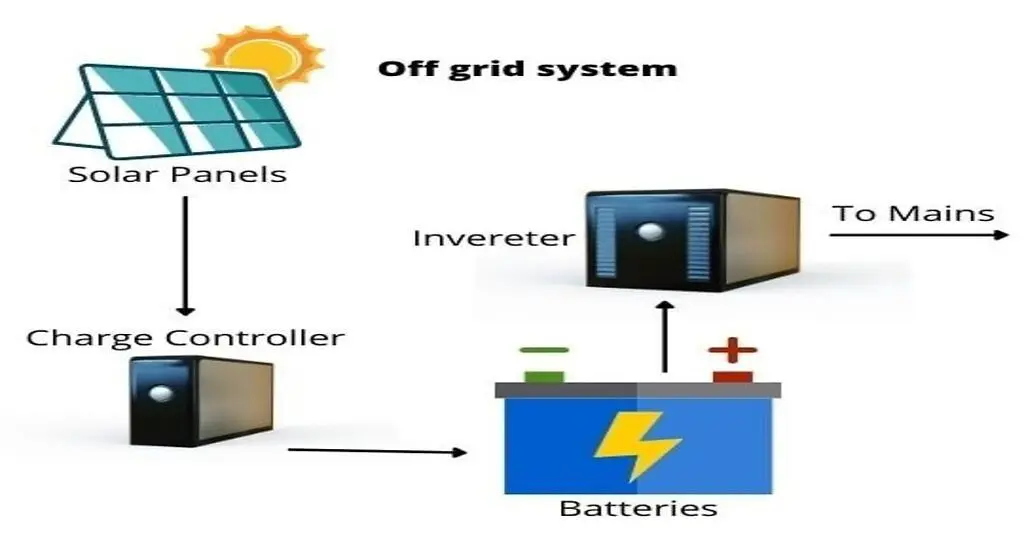
Off-grid solar removes that dependence. Your house generates its own electricity and stores enough energy in batteries to cover periods when the panels aren’t producing enough.
That distinction changes almost everything.
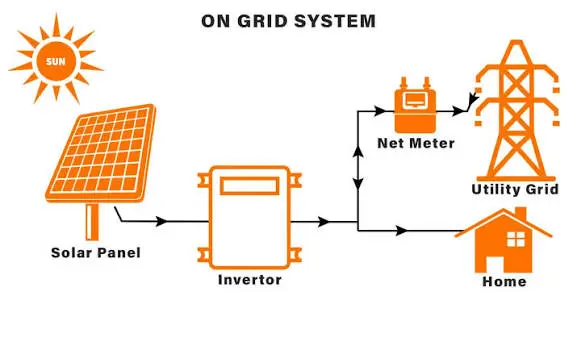
With a grid-connected system, the grid remains your backup source. During sunny hours, your solar panels supply your home first, while surplus electricity can be exported through an approved interconnection arrangement. When solar production is insufficient, electricity comes from MEPCO.
With an off-grid system, there is no assumption that MEPCO will supply your house at night or during cloudy weather. Your batteries and solar generation have to carry the load.
A simple comparison makes the difference clearer:
| Feature | MEPCO Grid-Connected Solar | Off-Grid Solar |
|---|---|---|
| Connection to MEPCO | Required | Not required for operation |
| Grid electricity available | Yes | No |
| Battery requirement | Not automatically required | Normally essential |
| Surplus solar | Can be exported under approved rules | Stored or curtailed |
| Backup during grid outage | Depends on inverter/system design | Built into system design |
| Regulatory approval | Required for grid interconnection | No grid interconnection approval for the solar system itself |
| Main financial benefit | Reduce grid purchases and receive applicable export credit | Reduce or eliminate grid purchases |
| System complexity | Moderate | Higher |
| Battery replacement concern | Lower if no battery is used | Major long-term consideration |
The important detail is that a grid-connected solar system does not automatically mean your house will have electricity during a MEPCO outage.
Many ordinary grid-tied inverters shut down when the grid goes down. That is a safety requirement associated with grid-connected operation.
If backup during load shedding is important to you, you need a system designed for backup operation, normally involving a hybrid inverter and suitable battery storage.
That is a separate decision from net metering.
2. What Changed for MEPCO Solar in 2026?
This is where older solar advice gets people into trouble.
You will still find explanations online saying that one exported unit simply cancels one imported unit. That description belongs to the older net-metering arrangement and should not be used blindly for a new 2026 installation.
NEPRA’s 2026 Prosumer Regulations establish net billing. Regulation 14 says electricity supplied by the licensee to the prosumer is billed at the applicable tariff, while electricity supplied by the prosumer to the licensee is billed at the national average energy purchase price. If the export credit exceeds the billed import amount, the resulting credit can be carried into the next billing cycle or paid by the licensee quarterly under the regulation.
That creates a very different calculation.
Suppose your solar system produces 600 kWh during a month.
Your home might directly consume 350 kWh while the remaining 250 kWh is exported. You cannot simply assume that those 250 exported units have the same monetary value as 250 units purchased from MEPCO.
The import and export sides are valued differently.
This is the point I would check first before signing a solar quotation.
The current regulations also set the agreement term at five years from commissioning, with possible five-year renewals by mutual consent.
There is another useful detail for anyone planning a system. The original 2026 regulations state that the proposed distributed generation capacity must not exceed the sanctioned load of the premises. They also require a load-flow study for facilities of 250 kW or above.
And the rules have not remained static. NEPRA’s own records show another amendment to the Prosumer Regulations on August 6, 2026. That amendment removed the Authority-concurrence requirement for distributed generation facilities of 25 kW or below, with the concerned licensee handling approval.
For a MEPCO household, this means an old blog post or an installer’s explanation from 2024 should not be treated as the final word.
The rules need to be checked at the time you apply.
For a broader explanation of the current framework, the MEPCO Net Metering 2026 guide also explains the application and billing differences.
3. Where Off-Grid Solar Starts Making More Sense
Off-grid solar has one obvious attraction: you stop depending on the grid for your electricity supply.
But that independence isn’t free.
The batteries are the part people sometimes underestimate.
Solar panels generate electricity during the day. Your home also consumes electricity at night, and that energy has to come from somewhere. In an off-grid system, the battery carries a large part of that responsibility.
The system therefore needs to be sized around your actual load.
A family using a refrigerator, lights, fans, water pump and a few electronics has a very different requirement from a house running multiple air conditioners, electric heaters and a large water motor.
And there is a second issue: several cloudy days.
An off-grid system needs enough battery capacity and solar generation to survive periods when production falls. That usually means more equipment and a larger upfront investment.
The trade-off looks like this:
Grid-connected solar
Solar panels → Home → Excess to grid
Grid → Home when solar is insufficient
Off-grid solar
Solar panels → Home
Solar panels → Battery
Battery → Home when solar is unavailable
There is no MEPCO supply sitting behind the second arrangement.
That is its strength and its weakness.
If your area has frequent outages and you have a strong reason to keep essential loads operating independently, off-grid or hybrid solar deserves serious consideration.
But if your main objective is reducing the electricity you purchase from MEPCO, completely disconnecting from the grid might be unnecessary.
4. The Financial Difference Is Bigger Than the Panel Price
When comparing quotations, don’t compare only the number of solar panels.
For a grid-connected system, your major components might include panels, inverter, mounting structure, protection equipment, wiring, installation and the required interconnection and approval work.
An off-grid system adds another major cost category: batteries.
Battery capacity also isn’t simply a matter of multiplying your daily electricity use by a number. Usable battery capacity, depth of discharge, inverter efficiency, battery chemistry, temperature and expected backup duration all matter.
This is why two systems with the same solar-panel capacity can have very different prices.
Consider a simple household example.
A home uses most of its electricity during the day. The washing machine, water pump and some air-conditioning load operate while the sun is available. That household gets strong value from direct solar consumption.
Another household has low daytime consumption but heavy electricity use after sunset. Much more of its solar production would need to be stored or exported.
Under the current net-billing arrangement, that difference matters.
The first household is using more of its solar energy directly, reducing the amount of electricity it needs to buy from MEPCO.
The second household is more dependent on what happens to its exported electricity and, if it wants to avoid buying from the grid at night, on battery storage.
This is why “install the biggest system you can afford” is poor advice.
Bigger isn’t automatically better.
The right size depends on consumption, sanctioned load, roof space, daytime usage, backup requirements and the applicable regulatory arrangement.
5. Where People Usually Go Wrong
The biggest mistake is confusing net metering with backup power.
A person installs solar, sees the panels working during the afternoon and assumes the house will remain powered when MEPCO supply disappears.
Then an outage happens.
The grid-tied inverter switches off.
Nothing is necessarily wrong with the solar panels. The system simply wasn’t designed to operate independently from the grid.
The second mistake is assuming exported units have the same value as imported units.
Under the 2026 Prosumer Regulations, they do not. Imported electricity is billed under the applicable tariff, while exported electricity is credited according to the national average energy purchase price.
The third mistake is ignoring the agreement and regulatory date.
Existing arrangements and new arrangements should not be casually mixed together. The 2026 regulations contain savings provisions for earlier licences and agreements, while subsequent amendments have further changed how the rules apply.
The fourth mistake is buying equipment before understanding the approval process.
A solar quotation should tell you what equipment is being installed, what capacity is proposed, what inverter is being used and what services are included. It should not leave the regulatory part as a vague “we will manage everything.”
And one more small point. Keep copies of your application, bill, agreement, equipment specifications and payment records. Solar projects involve enough paperwork that losing one document six months later is an avoidable headache.
6. How I Would Compare the Two Before Spending Money
I would put the decision on paper before paying a deposit.
First, look at the last several MEPCO bills and work out your normal monthly consumption. Don’t use one unusually high summer bill as the only reference.
Then separate daytime and nighttime consumption.
If your solar generation will mostly be used directly by the house, grid-connected solar becomes more attractive because you’re reducing purchases from MEPCO rather than relying heavily on export credits.
If your main concern is keeping the house running during outages, calculate your essential backup load separately.
A refrigerator, a few fans, lights, Wi-Fi and perhaps a water pump are one thing. Running every air conditioner through a long outage is another.
Then compare the battery cost.
A useful decision sheet looks like this:
| Question | Grid-Connected Solar | Off-Grid Solar |
|---|---|---|
| Do I want to remain connected to MEPCO? | Yes | No |
| Is reducing monthly grid consumption the main goal? | Strong fit | Possible, but more equipment needed |
| Do I need electricity during outages? | Only with suitable backup design | Yes, if system is correctly sized |
| Do I want to avoid batteries? | Possible | Usually not practical |
| Is daytime electricity use high? | Particularly useful | Useful |
| Is nighttime consumption high? | Consider battery or grid supply | Requires sufficient battery capacity |
| Am I comfortable with more equipment and maintenance? | Usually simpler | Requires more planning |
This is also where your installer should earn their fee.
Ask for the expected solar generation, estimated self-consumption, expected export, battery capacity if applicable and the assumptions used to calculate savings.
If the quotation only says “your bill will become zero,” I would ask for the calculation behind that statement.
7. What MEPCO Consumers Should Check Before Installation
The technical side matters, but so does the meter.
NEPRA’s regulations require metering equipment capable of accurately measuring electricity flow in both directions, either through a suitable two-direction meter or an arrangement using separate meters.
Your grid-connected system also needs compliant protection and interconnection equipment. The regulations place responsibility on the prosumer for relevant interconnection equipment and require protection arrangements that allow safe operation with the distribution system.
So before installation, check:
- Your existing connection type and sanctioned load
- Proposed solar capacity
- Inverter specifications
- Whether the inverter is appropriate for the approved grid connection
- Metering arrangement
- Protection equipment
- Application and approval requirements
- Installer documentation
- What happens during a MEPCO outage
- Battery capacity if backup is required
- How exported electricity will be treated under your applicable agreement
If you’re also seeing changes in your electricity bill layout, the new MEPCO bill format guide explains where readings, payable amounts and payment information appear on the redesigned bill.
And if a smart meter is installed later, don’t assume the technology itself changes the tariff. A smart AMI meter primarily changes how consumption data is collected and communicated. The MEPCO Smart AMI Meter guide explains the distinction.
FAQs
Is MEPCO net metering still available in 2026?
Grid-connected distributed generation is still governed by the NEPRA Prosumer Regulations, 2026, but the framework for new arrangements is based on net billing rather than the old one-for-one net-metering explanation. Always check the latest applicable notification before submitting an application.
Is off-grid solar better than MEPCO net metering?
Neither is automatically better. Grid-connected solar is generally more suitable when you want to reduce purchases from MEPCO while retaining grid supply. Off-grid solar makes more sense when energy independence and backup are more important and you’re prepared for the additional battery investment.
Do I need batteries with MEPCO net metering?
No, not necessarily. A grid-connected solar system can operate without batteries, depending on its design and approved interconnection. Batteries become relevant when you want backup power or want to shift more solar energy for use after sunset.
Does solar mean my MEPCO bill will become zero?
No. Under the current net-billing framework, imported electricity and exported electricity are treated differently. Your bill can also contain other applicable charges, so a solar system should not be sold to you on the assumption that every exported unit cancels an imported unit at the same value.
What changed for solar systems of 25 kW or less?
NEPRA’s August 6, 2026 amendment removed the requirement for Authority concurrence for distributed generation facilities of 25 kW or below. The concerned distribution licensee handles approval under the amended framework.
The practical choice between MEPCO-connected solar and off-grid solar comes down to one question: are you trying to reduce your electricity purchases, or are you trying to become independent from the grid?
Those are different goals.
For most households, that distinction should be settled before choosing the inverter, before calculating the number of panels and certainly before paying the installer.
If you decide to stay connected and need to manage the resulting electricity bills, the MEPCO Bill Payment Methods guide covers the main online and offline payment options.
For the regulatory side, I would also keep the latest NEPRA notification available because solar rules in 2026 have already been amended more than once.