MEPCO New Bill Format 2026: Key Changes Explained
The first thing you notice on the newer MEPCO bill is not necessarily a new number. It is the way the numbers are arranged.
The page feels less crowded. The amount you need to pay is easier to locate, the due date stands out more clearly, and payment-related information has its own space instead of getting lost among the other billing details.
That sounds like a cosmetic change. For someone who checks an electricity bill every month, it is a little more useful than that.
I have spent a lot of time looking at the questions people have around MEPCO bills, especially the simple ones that become confusing when a bill is redesigned. A consumer usually doesn’t want to study every line. They want to know three or four things quickly: how much they owe, why they owe it, when they have to pay it, and whether the numbers look reasonable.
The 2026 MEPCO bill format appears to be built more clearly around that basic need.
1. What Actually Changed on the MEPCO Bill
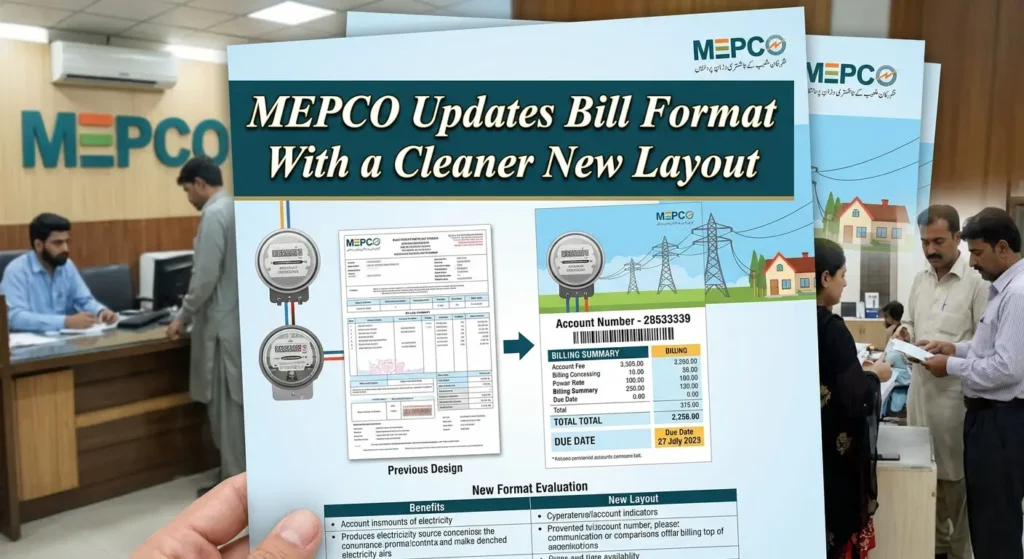
The updated format keeps the familiar billing information, but the presentation is cleaner.
The main differences are easier visual separation between sections, a more noticeable payable amount, clearer placement of the due date, and more distinct payment information including the QR-code area.
That does not mean your electricity connection has been given a new identity. Your basic consumer information still matters in the same way.
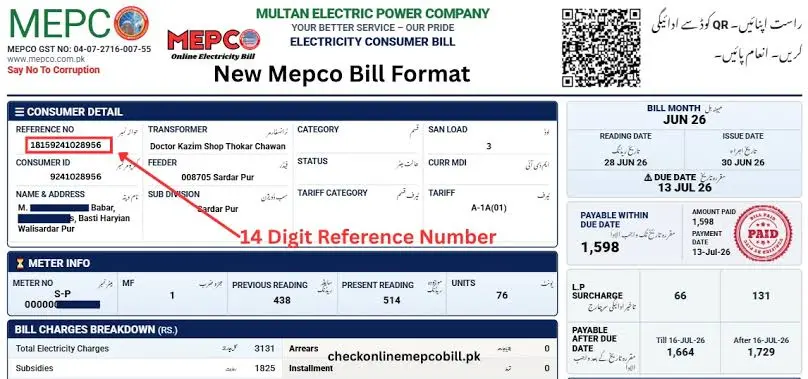
The 14-digit Reference Number remains one of the most useful details when checking billing information online, while the Consumer ID also remains relevant for identifying the connection.
The easiest way to understand the redesign is to forget about the page for a moment and compare what you actually need to find.
| Older presentation | Updated 2026 presentation |
|---|---|
| Billing information can appear crowded | Information is separated more clearly |
| Payable amount may require more searching | Payable amount is easier to spot |
| Due-date information is less prominent | Due date has clearer placement |
| Payment details compete with other information | Payment information has a more defined area |
| QR/payment information is less visually dominant | QR and payment information are easier to identify |
And this distinction matters.
A different-looking bill does not automatically mean a different tariff, a new meter reading, or an unexplained increase in your electricity charges.
The layout and the calculation are two separate things.
2. Which Numbers Should You Check First?
I don’t read a bill from the first line to the last line.
For an ordinary monthly check, that would be unnecessary. I start with the information that can tell me whether anything deserves a closer look.
Reference Number
This is the first identifier I would keep handy. It is particularly useful when checking a bill online or retrieving billing information.
If you are entering it into an online service, check every digit before submitting. One wrong number is enough to create confusion.
Billing period
Look at the dates covered by the bill.
A bill that covers a different number of days from the previous one needs to be considered differently from a bill covering roughly the same period.
Meter readings
This is where I would spend more attention than on the final amount.
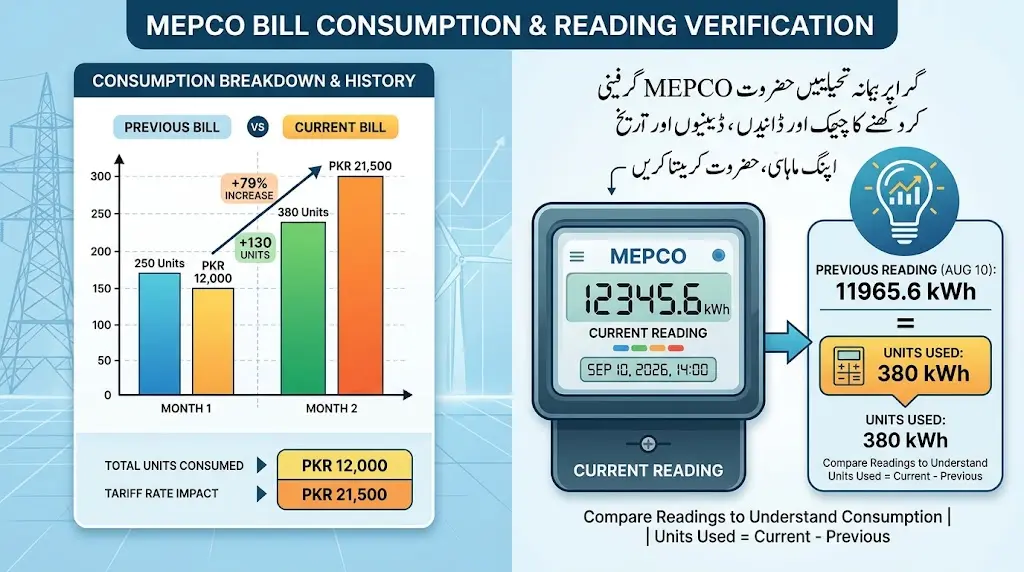
Compare the current reading with the previous reading and then look at the units consumed. If the units have increased substantially, a higher bill needs to be investigated differently than one where consumption stayed almost the same.
Due date
Find the normal payment deadline before doing anything else with the payment.
The redesigned format makes this information easier to identify, which is useful when you are checking the bill quickly.
Total payable amount
This is the figure that ultimately matters when you are preparing to pay.
But don’t make the mistake of looking at this number first and assuming it explains itself. It doesn’t.
The total is the result of several billing components.
3. Why the Bill Looks Different Even When the Electricity Is the Same
This is probably the part that creates the most unnecessary confusion.
A redesigned bill can look dramatically different while the electricity consumed by the household has not changed at all.
Think of it like rearranging the information on a receipt. The receipt can become easier to read without changing what you purchased.
The same basic idea applies here.
The new presentation organizes information more clearly. Your actual bill amount still depends on the billing details recorded for your connection.
Those details can include consumption, applicable electricity charges, taxes, duties, surcharges, adjustments, and other components appearing on the bill.
So if a consumer receives the new format and sees a larger amount, the first assumption should not be that the new design caused the increase.
Compare the numbers instead.
Here’s the simple progression I use:
Previous bill → Previous units → Current meter reading → Current units → Charges and adjustments → Total payable → Due date
That sequence tells you much more than comparing the appearance of two bills.
There is another small point worth making. Two bills with similar consumption don’t necessarily have identical totals. Other listed billing components can affect the final amount.
That is why I prefer looking at the individual figures before making a judgment about the total.
4. The Six Areas Worth Knowing on the New Layout
You don’t need to memorize every label on the page. Breaking the bill into a few practical areas makes it much easier.
Consumer and connection information
This identifies the connection and consumer record.
Your Reference Number and Consumer ID are especially useful when checking billing information online.
Keep the Reference Number somewhere accessible if you regularly check your bill online. It saves a bit of repeated searching every month.
Meter and consumption information
This tells you how much electricity was recorded during the billing period.
This is also the area I would compare with an older bill if the amount suddenly changes.
A common mistake is comparing only the rupee amount from one month to another. Consumption is usually a more useful starting point.
Electricity charges
These are the charges associated with the electricity recorded for the billing period.
You don’t need to become an expert in every tariff component just to perform a normal bill check. Start with the units, then examine the charges if something appears unusual.
Taxes, duties, surcharges and adjustments
This is where a bill can become confusing because the final amount is not simply “units multiplied by one price.”
Various applicable components can affect the amount payable.
If the total looks unexpectedly high, check these lines rather than assuming the entire increase came from electricity consumption.
Payable amount and due date
These are among the easiest details to identify in the redesigned layout.
The payable amount tells you what is currently due, while the due date tells you when the normal payment deadline falls.
The bill can also show the amount applicable after the due date, so don’t confuse the normal payable figure with a later amount.
QR code and payment information
The updated design also gives payment-related information a clearer place.
For someone paying through a compatible banking or payment application, a QR code can make the process more convenient.
But convenience shouldn’t replace verification.
Before confirming a digital payment, check that the consumer information and amount displayed by the payment service match the bill you intended to pay.
5. Here’s Where People Usually Misread the New Bill
A cleaner page creates one predictable misunderstanding.
People see a redesigned bill and assume the redesigned format is responsible for a higher amount.
That isn’t a reliable way to diagnose a billing increase.
Suppose your previous bill showed 250 units and the new bill shows 330. The fact that the page looks different doesn’t explain the additional 80 units.
You would first want to look at the meter readings and billing period.
And if the units are similar but the amount is substantially different, then the charges, taxes, surcharges or other listed components deserve attention.
I would check it in this order:
- Confirm the Reference Number and consumer information.
- Check the billing period.
- Compare the previous and current meter readings.
- Compare units consumed.
- Review the electricity-related charges.
- Look at taxes, surcharges and adjustments.
- Confirm the total payable amount.
- Check the due date.
That sounds like a lot written down, but once you have done it a few times, the whole check takes only a few minutes.
And keeping an older bill nearby helps. Memory is not a particularly good billing record.
6. Does the New MEPCO Format Change Your Bill Amount?
No, the layout change itself is not the explanation for a higher electricity bill.
The redesigned format is primarily about presentation and organization. It makes important information easier to locate, but the amount shown on the bill still comes from the billing information associated with your connection.
This is worth remembering because the timing can make the two things appear connected.
A consumer receives a bill in a new format and notices a higher total. It is natural to connect the two.
But the useful question is different:
What changed in the billing figures?
Look at the units. Look at the meter readings. Look at the billing period. Then look at the other charges.
If you are interested in related billing changes, the MEPCO bill format guide on mepcco-bill.pk is useful alongside the information about updated MEPCO tariff rates. The two subjects shouldn’t be mixed together because a format change and a tariff change are different issues.
There is a similar distinction when reading about MEPCO smart meters. A new meter technology, a new bill layout and a different bill amount are three separate things, even when they appear around the same time.
7. What the New Format Changes When You Pay
The practical advantage becomes more obvious when you are actually preparing to make a payment.
The amount and due date are easier to locate, while payment-related information has a more defined position on the bill.
That reduces one small but irritating problem: hunting around the page for the figure you need.
Still, the basic payment habit hasn’t changed.
Enter the Reference Number carefully when using an online payment service. Check the consumer information and amount before confirming. Save the payment confirmation.
If a payment is successful but the bill status does not update immediately, don’t automatically assume the payment failed and pay again. A delayed status update and a failed transaction are not necessarily the same thing.
This is particularly important because duplicate payments create a separate problem that then needs to be sorted out.
MEPCCO-Bill.pk also has separate guidance on MEPCO payment options and what to do when a payment is deducted but the bill does not immediately reflect it. Those are useful references when the issue is payment rather than bill design.
8. What If Something on the New Bill Looks Wrong?
The first response should be comparison, not panic.
Keep the current bill and an earlier bill side by side.
Check the consumer information first. Then compare the billing period, meter readings and units.
If the issue is still unclear, look at the detailed charges and any adjustments shown on the bill.
For a disputed reading or billing amount, keep copies of the relevant bills and payment records. Those records give you something concrete to refer to when contacting the appropriate customer-service or complaint channel.
This becomes especially useful when the problem isn’t actually the new format.
For example, if the meter reading appears unusual, the relevant issue is the meter reading. If a payment is missing, the relevant issue is the payment transaction. If an assessment or detection bill is involved, that has its own explanation and complaint process.
The page design doesn’t need to become the explanation for every billing problem.
One side thought
I still think screenshots are underrated.
If you receive a bill with an unusual reading or amount, save a copy before the next bill replaces it. It’s a tiny habit, but later, when you need to compare figures, you have the actual record rather than trying to remember what appeared on the screen.
Then you can move on. Not every unusual-looking bill requires a full investigation.
9. A Five-Minute Check for Every New MEPCO Bill
The redesigned format makes a simple monthly routine easier.
Here is the version I would keep:
| Check | What you are looking for |
|---|---|
| Consumer details | Correct connection and identification |
| Billing period | Correct dates and billing cycle |
| Meter readings | Current reading compared with previous |
| Units | Whether consumption changed |
| Charges | Main electricity-related amounts |
| Taxes/adjustments | Other components affecting the total |
| Payable amount | What you currently need to pay |
| Due date | Normal payment deadline |
| Payment details | Information needed before paying |
If all of those look normal, there isn’t much reason to keep staring at the bill.
If one doesn’t, that’s the point where a closer check makes sense.
This is also why the cleaner format is useful. It reduces the time needed for the first-pass check without requiring consumers to understand every technical term printed on the page.
10. The Main Benefit Is Simpler Reading
The biggest change in the 2026 MEPCO bill format is the way information is presented.
The bill still contains a lot of numbers, but the information that most consumers need first is easier to identify: the connection details, meter information, consumption, payable amount and due date.
That’s a practical improvement.
It doesn’t mean every billing question disappears. It doesn’t mean a higher bill is caused by the redesign. And it doesn’t replace the need to check the actual numbers.
It simply makes the first look at the bill less confusing.
For people who check their bills online, that same principle applies. Keep your Reference Number available, compare the important figures, and don’t judge a bill only by its final amount.
The page tells you what has been billed. The numbers tell you why.
FAQs About the MEPCO New Bill Format 2026
Has MEPCO introduced a new bill format in 2026?
The updated format uses a cleaner presentation of the existing billing information. It gives clearer visual separation to important details such as the payable amount, due date and payment information.
Has the MEPCO Reference Number changed because of the redesign?
The bill-format information indicates that the 14-digit Reference Number remains an important identifier for checking billing information. The Consumer ID also continues to be used for connection identification.
Why is my new MEPCO bill higher than the previous one?
The new layout itself does not explain a higher bill. Compare the units consumed, meter readings, billing period, electricity charges, taxes, surcharges and other adjustments before deciding what caused the difference.
Where should I look for the due date?
The due date is presented more clearly in the updated layout, close to the main payable information. Check it before making your payment so you know which payment deadline applies.
Can I use the QR code on the new MEPCO bill?
The redesigned bill includes QR and payment-related information. If your banking or payment application supports the relevant QR function, verify the consumer details and amount shown before confirming the transaction.
The new format doesn’t require you to relearn how electricity billing works. It mainly changes how the information is arranged.
For a normal monthly check, that is probably the most useful way to look at it: find the numbers that matter, compare them with the previous bill, and investigate only when something actually looks different.